Agent for Service of Process: What It Is and Why Your Business Can't Ignore It
Learn what an Agent for Service of Process is, why your LLC requires one, state compliance rules, and how to avoid administrative business dissolution.
When forming an LLC, corporation, or nonprofit organization, one of the first legal requirements you'll encounter is appointing an agent for service of process. While many business owners treat it as a simple paperwork requirement, choosing the right agent is essential for maintaining compliance and protecting your business.
Failing to maintain a registered agent or allowing the appointment to lapse can result in missed legal notices, compliance issues, administrative penalties, or even the loss of your LLC's good standing. This guide explains what an agent for service of process does, who can serve in this role, and how to keep your business compliant from day one.
What Is an Agent for Service of Process?
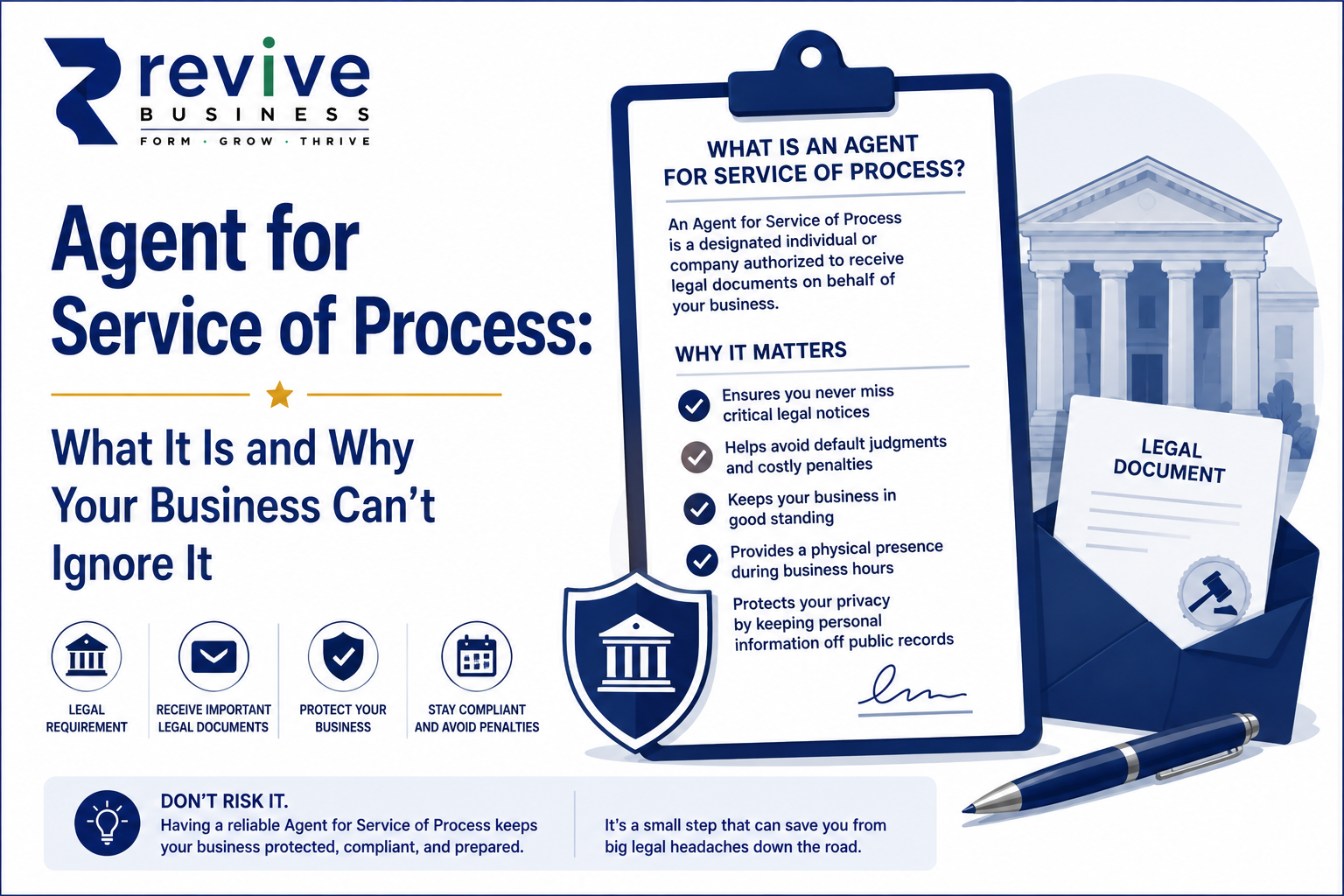
A service of process agent (also known as a registered agent or statutory agent) is someone or a company that accepts official legal papers on behalf of your company.
This includes:
-
If your business is sued, legal summons and legal notices are sent first to your agent.
-
Government correspondence, including tax notices, annual report reminders, and compliance notifications
-
Regulatory notices and other official documents required by state agencies
Most states require a registered agent to maintain a physical street address within the state. P.O. boxes generally aren't accepted, and someone must be available during normal business hours to receive documents.
Why Does an LLC Need a Registered Agent?
Courts and state agencies need a reliable way to deliver legal notices to a business. Without a registered agent, a company may miss important legal documents or official correspondence, which can lead to missed deadlines, default judgments, or other compliance issues.
Thus, each U.S. state has laws requiring registered entities (LLCs and corporations, as well as nonprofits) to keep a representative for service of process in that state. If doing business in more than one state, usually a registered agent is required in each state.
If your registered agent information is outdated and you miss an important legal notice, your business could face serious consequences. In some cases, courts may issue a default judgment if your company fails to respond to a lawsuit, even if you were unaware that legal action had been filed.
While many business owners assume this scenario is unlikely, it happens more often than expected, particularly when businesses move locations without updating state records.
Who Can Serve as Your Registered Agent?
There are three general solutions:
-
Yourself or a Business Partner: You may designate yourself as the agent if you have a street address in the state and are available during business hours. The downside is that your address becomes part of the public record, and you must remain available during normal business hours.
-
An Employee or Colleague: Some companies have a trusted colleague or employee. The same availability requirements apply, meaning the designated individual must generally be available at the registered address during business hours.
-
A Professional Registered Agent Service: This is best for most LLCs and small businesses. A professional registered agent service maintains a physical office address and accepts legal correspondence on your behalf.
The annual cost varies from provider to provider and by state, and is usually between $50 and $300.
How This Applies to a Nonprofit LLC
The registered agent requirement applies equally to for-profit and nonprofit entities. Forming a nonprofit LLC does not eliminate any of the state's registered agent obligations. Nonprofit status does not reduce these compliance requirements.
No matter how you organize your community organization, charitable organization, social enterprise, or nonprofit LLC, you will need an agent to receive legal and regulatory forms on your behalf.
In fact, nonprofits can get more state letters than a typical for-profit LLC, such as charitable solicitation registrations, attorney general filings, and grant compliance notices. If you have a reliable registered agent, none of that will be lost.
Example: A nonprofit names its founder as the registered agent. After the founder moves, the registered agent address is not updated with the state. As a result, important legal notices and compliance reminders may not reach the organization, potentially leading to missed filing deadlines, penalties, or the loss of good standing.
The fix: With a professional registered agent service, all notices are reliably received — regardless of where the founder lives or moves.
The Connection Between Registered Agents and Business Formation
When an LLC is just being formed, the registered agent is usually designated at the time of formation. Most states will require you to state the agent's name and address in your Articles of Organization.
Most professional LLC formation services include registered agent service for the first year or offer it as an additional service. Because maintaining a registered agent is a legal requirement in most states, businesses should ensure this requirement is met from the time the LLC is formed.
Maintaining good standing requires more than appointing a registered agent. Businesses must also stay current with annual reports, tax filings, and other compliance obligations.
How to Update Your Registered Agent
Updating your registered agent is typically a straightforward process:
-
Select a new Registered Agent: Person/service
-
File the required registered agent change form with your state's Secretary of State (or equivalent filing office).
-
Pay the required filing fee (typically $10-$50)
-
Check to make sure the update has been properly entered into your business records in your state.
You can verify your current registered agent details anytime through your state's business entity search tool; Most state business entity search tools are available through the NASAA state resources directory or your state's Secretary of State website.
Frequently Asked Questions
Is an agent for service of process the same as a registered agent?
Yes. "Agent for service of process," "registered agent," and "statutory agent" generally refer to the same role, although terminology varies by state.
Can I be my own registered agent?
Yes. Most states allow business owners to serve as their own registered agents, provided they maintain a physical address in the state and are available during normal business hours.
What happens if my registered agent resigns or becomes unavailable?
Your business is not compliant until a new agent has been appointed. A notice normally is sent by the state, but if sent to an outdated address, then you might not receive it. If anything changes, update agent information as soon as possible.
Does a nonprofit LLC need a registered agent?
Yes. Every registered business organization, including nonprofit LLCs, must have a registered agent in the state where the business was registered.
Final Thoughts
Meeting the agent for service requirement is generally straightforward, but overlooking key details or failing to keep the information up to date can lead to compliance issues. If the agent has outdated information or if a legal notice is missed or a registration has expired, there may be major problems and all the wrong things happening at the worst time.
Whether you're forming a new LLC, launching a nonprofit organization, or reviewing your compliance requirements, maintaining an accurate registered agent is a simple step that can prevent costly legal and administrative issues later. Revive Business can help you stay compliant from formation through ongoing operations.