Business License as an LLC: What You Actually Need and Why It Matters
Do you need a business license for an LLC? Learn the difference between LLC legal structure, city/state permits, fees, and compliance requirements.
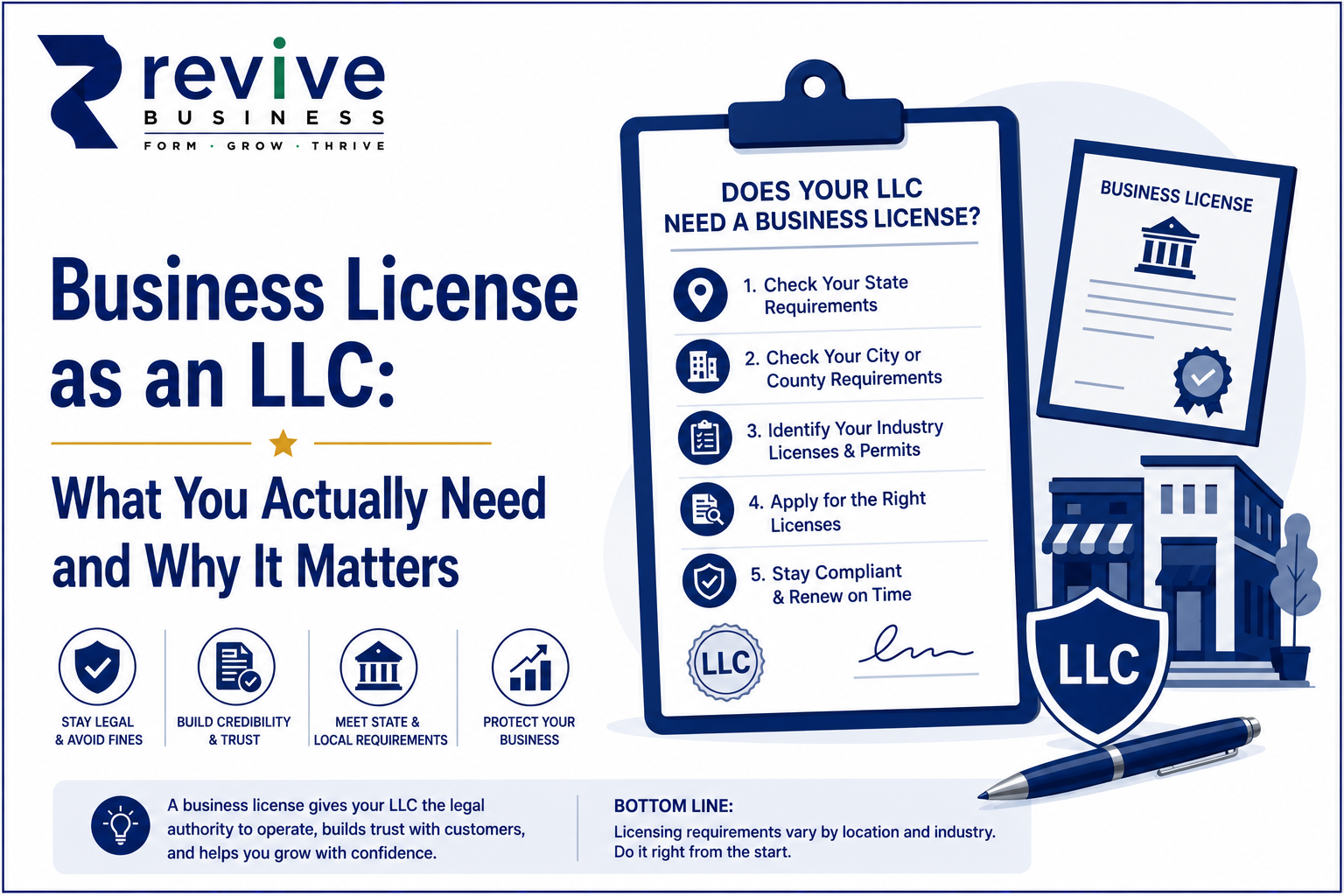
Many new business owners assume that forming an LLC automatically permits them to operate. In reality, forming an LLC establishes your business as a legal entity, but it does not replace the licenses, permits, and registrations that may be required before you can legally begin operating. In most cases, you'll need both your LLC and the appropriate business licenses to comply with state and local regulations.
An LLC provides legal structure and liability protection, while a business license grants permission to operate within a specific jurisdiction. Confusing the two can lead to fines, compliance violations, tax issues, or even business closure.
This guide explains the business licenses an LLC may need, how requirements vary by industry and business type, and the steps you should take to stay compliant from day one.
Does an LLC Need a Business License?
This is the most prevalent misconception to clear up early.
An LLC is a legal entity that you have created in your state. That's it. It does not give you permission to sell goods, services, or run a business in your city or county. To do that, you need to have different permits and licenses, and this keeps the meaning while sounding more precise and professional.
What Business Licenses Does an LLC Typically Need?
There's no single universal license. Instead, several layers may apply:
General Business License
Most cities and counties require a general business license, sometimes called a business tax certificate or municipal operating license. This license allows your business to legally operate within a local jurisdiction.
This is typically done once a year, and prices vary based on geographic location from $25 to $500. Applications are made through your city or county clerk's office.
State-Level Licenses
In some states, there are extra licenses required at the state level, particularly in regulated occupations such as real estate, healthcare, contracting, food service, childcare, and others. See what your state's business portal has to offer for your industry.
Sales Tax Registration
If your LLC is involved in selling tangible goods (or in some states, tangible services and digital goods), you will need to obtain a sales tax permit before you begin collecting sales taxes from customers. This is usually in addition to your general business license, and most states require it. One of the most common compliance mistakes is collecting sales tax without proper registration or failing to collect it when required by law. To begin, visit your state's Department of Revenue website.
Federal Licenses
Most LLCs do not require a Federal License. Federal licenses are generally only required for businesses operating in highly regulated industries such as aviation, agriculture, alcohol production, firearms, and financial services. The SBA's licensing tool can help you identify whether any federal requirements apply.
Does a Non Profit LLC Have Different License Requirements?
Licensing requirements become more complex when an LLC is formed for nonprofit purposes because state laws and federal tax rules don't always align.
A nonprofit LLC is a relatively unusual business format. The majority of nonprofits are organized as nonprofit corporations and obtain 501(c)(3) status by filing with the IRS. While some states allow LLCs to pursue nonprofit objectives, nonprofit corporations remain the preferred structure for organizations seeking federal tax-exempt status.
Your licensing needs will vary depending on:
-
Your state's rules; not all states recognize nonprofit LLCs the same way
-
Whether you have tax-exempt status; federal tax exemption (501(c)(3)) requires a separate IRS application and is typically tied to nonprofit corporations, not LLCs
-
Your activities; charitable solicitation, fundraising, or working with vulnerable populations often triggers additional licensing requirements at the state level.
The actual scenario: An arts group established a nonprofit California LLC to conduct workshops and seek funding grants. They soon learned that they still had to obtain a general business license from the city and a charitable solicitation registration from the state attorney general's office, and the process for obtaining 501(c)(3) status was not so easy without the transformation of the entity into a nonprofit corporation. Ultimately, the organization faced additional administrative hurdles and restructuring costs that could have been avoided with a nonprofit corporation from the start.
When forming a mission-driven organization, it's worth talking with a business attorney before choosing between a nonprofit LLC and a nonprofit corporation.
The Role of a Registered Agent
After you've established your LLC and are getting licenses, you'll also need to keep your registered agent's details up to date with the state. A registered agent receives important legal and government correspondence on behalf of your LLC, including tax notices, annual report reminders, compliance documents, and legal service of process.
Your LLC can become "out of good standing" if your registered agent information is incorrect, or if you miss a deadline to renew your registration. Many business owners use professional registered agent services to help ensure important notices are received, and compliance deadlines are not overlooked.
How to Get a Business License for Your LLC
-
Form your LLC first; if you haven't yet, professional LLC formation services can handle the filing accurately and quickly.
-
Identify your city and county requirements; visit your local government's business portal or call the city clerk.
-
Check state-level industry licenses; search your state's Secretary of State or licensing board website.
-
Register for sales tax if you sell taxable goods or services
-
Apply for federal licenses only if your industry requires them
-
Set up reminders for renewals; most licenses need annual renewal
Frequently Asked Questions
Does an LLC automatically come with a business license?
No. Forming an LLC does not automatically provide a business license. An LLC establishes your legal business entity, while licenses and permits must be obtained separately based on your location and business activities.
Do online businesses need a business license?
In most cases, yes. Online businesses are often subject to the same local licensing requirements as traditional businesses and may also need sales tax registration depending on what they sell and where their customers are located.
Can a nonprofit operate as an LLC?
It depends; a nonprofit LLC is a complicated entity that has limitations, especially at the federal tax-exemption level, in some states. Most nonprofits will be better served by establishing a nonprofit corporation.
How do I know which licenses my LLC needs?
Start with the SBA's business license tool, then check your specific city, county, and state requirements. When in doubt, a business advisor can map it out for you.
Get It Right from the Start
Business licensing is not too difficult, but too easy to forget when you're busy getting started. Failure to obtain the proper permit or registration could result in fines, back taxes, or operating without legal protection.
Starting an LLC involves more than filing paperwork. From business licensing and tax registrations to ongoing compliance requirements, taking the right steps early can help you avoid costly mistakes later. If you need guidance with LLC formation, licensing, or compliance management, Revive Business can help simplify the process and keep your business on track.