Can an LLC Be a Nonprofit? Here's What You Need to Know
Can an LLC be a nonprofit? Learn how an LLC can qualify for IRS 501(c)(3) tax-exempt status, strict state rules, and better nonprofit alternatives.
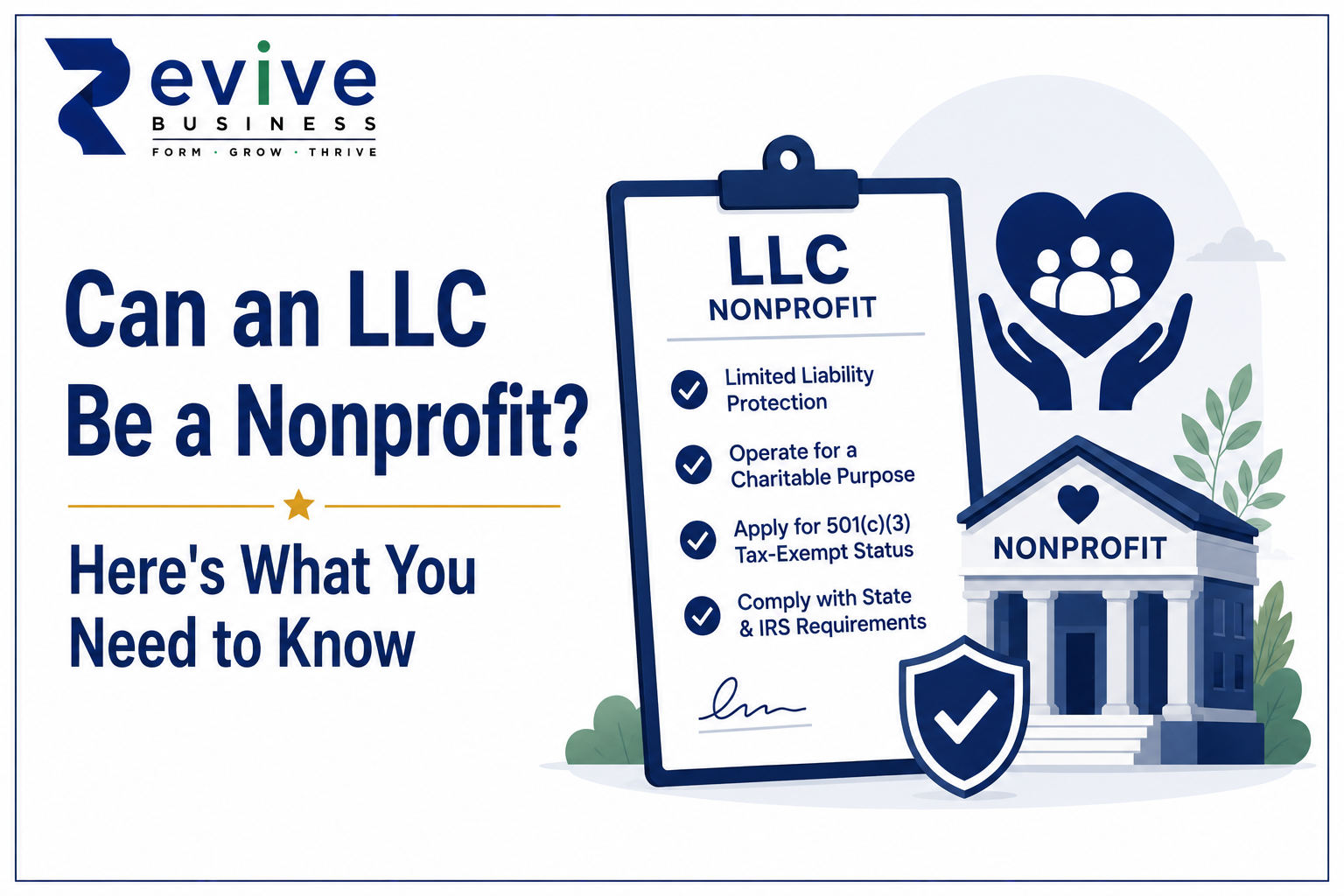
One of the most common questions asked by mission-driven entrepreneurs is: Can an LLC be a nonprofit? The answer depends on state law and IRS requirements.
The short answer is: it's complicated. There are some states that allow for the creation of a nonprofit LLC, but it is not always the best option. To understand why, you simply have to take a quick look at how LLCs and nonprofits really work, and what you're really looking to accomplish.
How an LLC Works By Default
A Limited Liability Company (LLC) is a business structure designed to provide liability protection to its owners while allowing profits and losses to pass through to their personal tax returns.
LLC structures do not have tax-exempt status, a built-in mechanism for charitable purposes, or donor tax deductions. Even if you think you're making an LLC for nonprofit reasons, the IRS will still consider you a for-profit business.
Can an LLC Apply for Nonprofit Status?
This is where people get confused. The IRS grants tax-exempt status under Section 501(c)(3), but almost always to corporations, not LLCs.
There are a few technical requirements to consider when an LLC applies for 501(c)(3) status:
-
It's composed of all 501(c)(3) organizations.
-
The LLC's operating agreement must include provisions that comply with IRS nonprofit requirements, such as restrictions on private benefit and asset distribution.
-
The LLC will be formed for charitable purposes.
Such a structure is seldom used and difficult in practice. These applications are carefully reviewed by the IRS, and most state laws lack a clear nonprofit LLC structure. Few states, such as California and Minnesota, have legislation dedicated to it.
A nonprofit corporation is the more streamlined and simple route to 501(c)(3) for the majority of individuals who are starting a nonprofit corporation.
What's the Difference Between a Nonprofit LLC and a Nonprofit Corporation?
The following comparison highlights the key differences between a nonprofit LLC and a nonprofit corporation:
|
Nonprofit LLC |
Nonprofit Corporation |
|
|
IRS 501(c)(3) eligibility |
Rare, highly conditional |
Standard Path |
|
State Recognition |
Limited States |
Available in all 50 states |
|
Donor Tax Deductions |
Not guaranteed |
Yes, once approved |
|
Governance Structure |
Flexible but unclear |
Board of directors required |
|
Complexity |
High |
Moderate |
If you are a food bank, arts organization, or community foundation and you believe you need tax-deductible donations, then a nonprofit corporation is likely your best choice.
When Does a Nonprofit LLC Actually Make Sense?
There are situations where this is a valid structure:
-
Subsidiary of an existing nonprofit: A tax-exempt 501(c)(3) organization may create an LLC subsidiary to conduct specific activities, such as operating a gift shop, managing real estate, or running fee-based programs, while the parent nonprofit retains its tax-exempt status.
-
LLC Co-Owned by Nonprofits: Two or more existing 501(c)(3) organizations may co-own an LLC and use it to operate a shared project or business activity while maintaining their separate nonprofit organizations. As all members of the LLC are tax-exempt, the LLC itself may qualify for tax-exempt status.
-
Social enterprises with a hybrid mission are businesses that have a double purpose: to make money and to address a social problem. In such instances, it may be a better idea to form a for-profit LLC instead (without a donor tax deduction).
-
Another option to consider is forming a Benefit Corporation, a legal business structure available in many states that allows companies to pursue both profit and a stated public benefit. Separately, businesses of various legal entity types may choose to pursue B Corp certification through B Lab if they meet its social and environmental performance standards.
The Tax Reality You Can't Ignore
Trying to manage your business finances without proper accounting support can lead to costly mistakes. The consequences can include inaccurate financial records, cash flow problems, tax compliance issues, and poor business decisions based on unreliable financial data.This is where accounting services come in handy. The consequences of doing this are serious.
If the IRS does not recognize your LLC as a tax-exempt organization, contributions to the LLC generally will not be tax-deductible for donors, and the LLC's income may be subject to federal and state taxes. This could ruin the fundraising process and leave you vulnerable to back taxes.
LLCs are more complex than a typical nonprofit corporation for ongoing tax compliance, even if they are eligible to be classified as 501(c)(3). There will be a need for very careful record-keeping and for annual IRS reports (Form 990) and a clear distinction between charitable activities and any money-making operations.
Choosing the Right Structure: A Practical Decision Framework
Consider these points before making your choice:
-
Need donors to obtain a tax deduction? You almost certainly will require a nonprofit corporation.
-
Do you have a 501(c)(3) and want to form a subsidiary? A nonprofit LLC may be a good option.
-
Looking for flexibility in your income and a social cause? A benefit corporation or social enterprise LLC may be your choice.
-
Don't know which of these structures fits? Consult a professional before submitting anything.
The structure you choose affects everything: your ability to fundraise, apply for grants, hire staff, and operate long-term. Getting it right from the start is far easier than restructuring later.
Getting Your Formation Right
When you're creating a nonprofit corporation or thinking of using a mission-driven LLC, paperwork is important. Professional LLC formation services can help you get your governing documents right, your state paperwork right, and not begin with structural issues that can turn into a legal nightmare later on.
You'll also require a registered agent service for receiving official correspondence, an essential part of any business structure, including nonprofits. This will prevent your company's address from being listed in public records and also will not allow you to miss out on essential legal or state notifications.
Frequently Asked Questions
Can I call my LLC a nonprofit if I donate all profits to charity?
No, profits can be donated without making your LLC a nonprofit. If your organization does not receive 501(c)(3) recognition, then you will still be a for-profit business, and the donors will not be able to deduct their donations.
Is it harder to get 501(c)(3) status as an LLC than as a corporation?
Significantly harder. The IRS has a clear, established process for nonprofit corporations. For LLCs, the requirements are strict, and the approval rate is much lower.
What states allow nonprofit LLCs?
A small number of states, including California and Minnesota, have specific legal provisions addressing nonprofit LLCs. However, the rules vary significantly, so it's important to consult your state's Secretary of State and a qualified attorney before forming one.
Can a nonprofit own an LLC?
Yes; it is one of the more common arrangements. The ownership of a subsidiary LLC by a 501(c)(3) nonprofit organization does not result in loss of the exempt status of the nonprofit if the activities are properly structured to be conducted through the subsidiary rather than by the nonprofit.
Final Thoughts
A nonprofit LLC exists in a legal gray area that most organizations are better off avoiding. If your goal is to serve a charitable mission, raise donations, and operate tax-free, a nonprofit corporation is almost always the right foundation.
If you're unsure whether a nonprofit corporation, nonprofit LLC, or another entity structure is the best fit for your mission, the team at Revive Business can help you evaluate your business structure options, handle entity formation, and ensure your governing documents are set up correctly from day one.