DBA California: What It Is, How to File One, and When You Actually Need It
Learn what a DBA in California is, how to file a fictitious business name, what it costs, and whether you need an LLC instead for real liability protection.
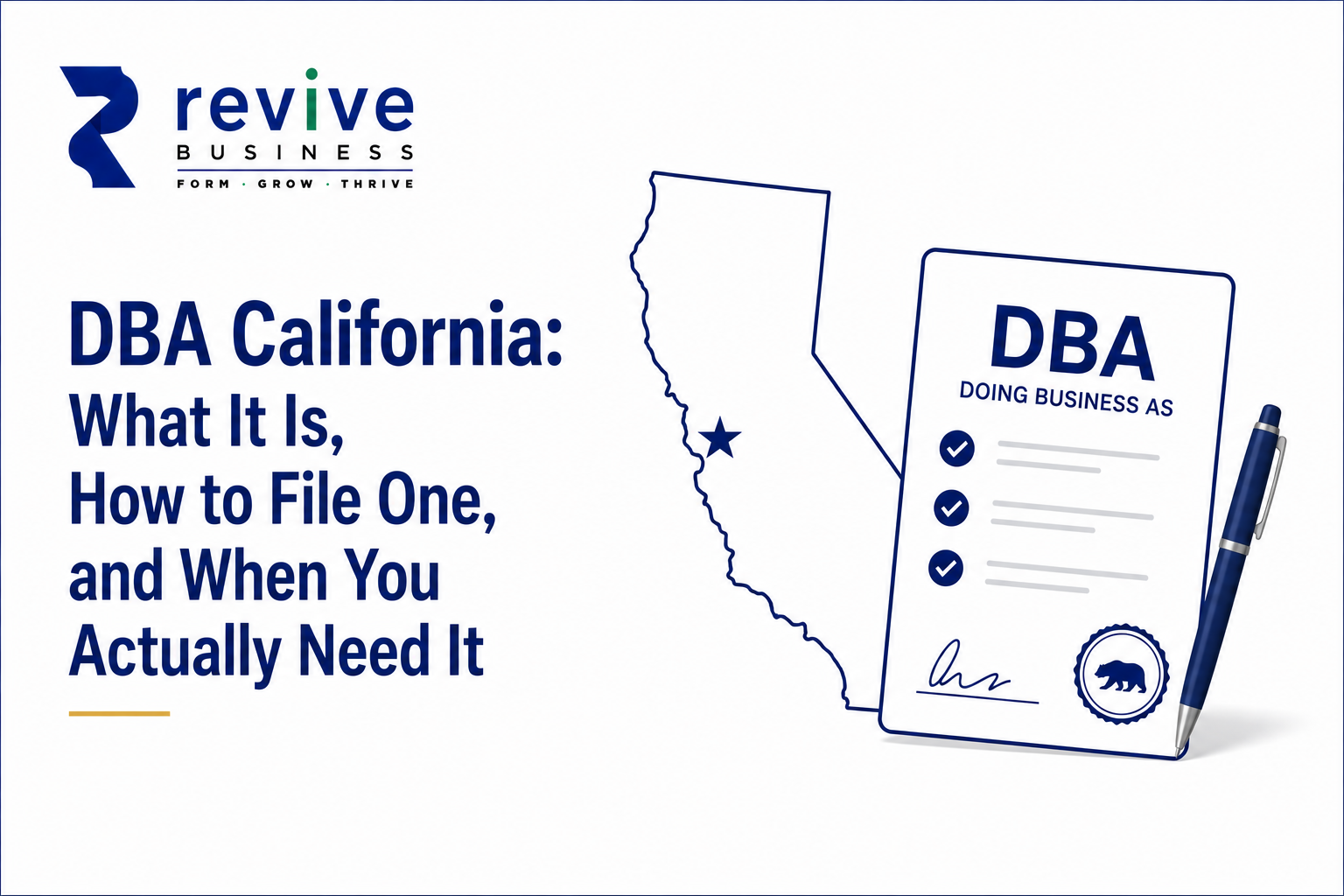
If you are starting a business in California under a name that is not your own legal name, you will need to file a DBA. California refers to this as a fictitious business name, and it is one of the most misunderstood registrations in the state. Many business owners file one thinking it gives them legal protection. Others skip it entirely without realizing they are required to have one. Both are expensive mistakes.
This guide covers what a DBA in California actually is, how the filing process works, what it costs, how long it takes, and most importantly, what a DBA does not do so you can make an informed decision about whether a DBA alone is sufficient for your situation or whether a more formal business structure makes more sense.
What Is a DBA in California
DBA stands for Doing Business As. In California, the official term is fictitious business name, sometimes abbreviated as FBN. A DBA is simply a registration that allows you to conduct business under a name that is different from your own legal name or your registered business entity name.
If your legal name is Maria Gonzalez and you want to operate a bakery called Golden Crumb Bakery, you need to file a fictitious business name in California before you can legally use that name in commerce. If your LLC is called Gonzalez Holdings LLC but you want to market a product line under a separate brand, that brand name also requires a DBA filing.
California Business and Professions Code Section 17910 requires anyone conducting business under a fictitious name to register that name with the county clerk in the county where the principal place of business is located. This is a legal obligation, not a formality. Operating under an unregistered fictitious business name can prevent you from opening a business bank account, enforcing contracts in court, and staying compliant with state regulations.
Who Needs to File a DBA in California
Sole proprietors and general partnerships are the most common filers. If you are operating as a sole proprietor under any name other than your own full legal name, a DBA is required. A sole proprietor named James Lee operating as JL Consulting is legally required to register JL Consulting as a fictitious business name with the relevant county clerk.
LLCs and corporations can also file DBAs when they want to operate a division, product line, or brand under a different name without creating a separate legal entity. A technology company that wants to launch a consumer-facing software product under a separate brand would file a DBA for that brand rather than incorporating a new company.
You do not need a DBA if you are operating strictly under your own full legal name as a sole proprietor, or if you are an LLC or corporation operating exclusively under the exact name registered with the California Secretary of State.
How to File a DBA in California
California DBA filings are handled at the county level, not the state level. This means the process, fees, and forms vary slightly depending on which county your business operates in. The general process is consistent across counties even if the specific forms differ.
Step 1: Search for Name Availability
Before filing, search your county clerk's fictitious business name database to confirm the name you want is not already in use. Many California counties provide this search online. Los Angeles County, San Diego County, and Santa Clara County all have searchable online databases. Choosing a name already in use can result in your filing being rejected or, worse, a cease-and-desist from the existing registrant.
Step 2: File with Your County Clerk
Submit a Fictitious Business Name Statement to the county clerk in the county where your principal place of business is located. Most California counties now accept online filings in addition to in-person and mail submissions. The filing fee ranges from approximately $26 in some counties to $75 or more in others like Los Angeles. Check your specific county clerk website for the current fee schedule before submitting.
The statement requires your chosen fictitious business name, your legal name and address, your business address, the type of business entity, and the nature of your business activities.
Step 3: Publish in a Local Newspaper
California law requires you to publish your fictitious business name statement in a newspaper of general circulation in the county where it was filed. This publication must run once a week for four consecutive weeks and must begin within 30 days of filing. After publication is complete, you file a proof of publication affidavit with the county clerk.
Publication costs vary widely depending on the newspaper and county. Budget between $40 and $200 for publication in most California counties, with higher costs in counties served by larger circulation newspapers.
Step 4: Renew Every Five Years
California fictitious business name registrations expire after five years. You must renew before the expiration date to maintain your right to use the name legally. If significant changes occur to your business information before the five-year period ends, such as a change in ownership or business address, you may need to file a new statement rather than waiting for renewal.
What a DBA Does Not Do
This is where many California business owners make a costly error. A DBA is a name registration. It is not a business structure, and it provides no liability protection whatsoever.
If you are a sole proprietor operating under a DBA and your business is sued, the lawsuit reaches through the business name directly to you as an individual. Your personal savings, your home, and your personal assets are fully exposed to any business judgment or debt. The fictitious business name is simply a label. It creates no legal separation between you and your business.
A DBA also does not give you exclusive rights to a business name across California or nationally. Someone else can register the same name as a trademark or as an LLC name and potentially force you to stop using it. If protecting your brand identity matters to your business, you need either a California LLC formation with a reserved name or a federal trademark registration, not just a DBA.
DBA vs LLC in California: Choosing the Right Structure
For a very early-stage side project, a short-term business test, or a one-time project where liability exposure is genuinely minimal, a DBA may be sufficient. It is faster and cheaper to establish than a formal business entity and carries fewer ongoing compliance obligations.
For any business with real revenue, client relationships, employees, or liability exposure, an LLC provides protections a DBA simply cannot match. California LLC formation services create a separate legal entity that shields your personal assets from business claims, allows you to build business credit independently, and adds credibility with clients, banks, and vendors.
The most common scenario for using both a DBA and an LLC is when a business owner forms an LLC and then files a DBA so the LLC can operate under a brand name that differs from its registered legal name. This structure gives you both the liability protection of the LLC and the brand flexibility of the fictitious business name.
California DBA Cost Summary
County filing fee: $26 to $75 depending on the county. Publication cost: $40 to $200 depending on the newspaper and county. Proof of publication filing: typically included in the original filing fee or a small additional charge. Renewal after five years: similar to original filing fee.
Total startup cost for a California DBA ranges from roughly $75 to $300 depending on your county and chosen publication. This is significantly less than forming an LLC, which carries a $70 filing fee plus California's mandatory $800 annual minimum franchise tax. The tradeoff is that the DBA provides no liability protection and no separate legal entity.
Keeping Your Finances Organized After Filing a DBA
Whether you operate as a sole proprietor under a DBA or as a formal LLC, maintaining clean and accurate financial records is not optional. California's tax authorities and the IRS both require documented income and expense records, and the consequences of disorganized books at tax time range from missed deductions to audit exposure.
Many sole proprietors operating under a DBA underestimate how quickly their bookkeeping needs grow once business activity picks up. Professional accounting services help DBA holders and LLC owners alike maintain accurate records, separate business and personal transactions, and stay ready for tax season without last-minute scrambling.
Staying Compliant After Your DBA Is Filed
Filing a DBA is a starting point, not a complete compliance solution. Depending on your business type and location, you may also need a local business license from your city or county, a California seller's permit if you sell taxable goods or services, an EIN from the IRS if you hire employees or open a business bank account, and professional state licenses if you operate in a regulated industry.
If you eventually choose to convert from a sole proprietorship DBA to a formal LLC, you will also need to designate a registered agent service in California. All California LLCs are required to maintain a registered agent with a physical California address, and that agent must be available during normal business hours to receive legal documents on the business's behalf. Using a professional service keeps your personal address off the public record and ensures you never miss a critical legal notice.
Frequently Asked Questions
How long does it take to get a DBA in California?
County processing times vary. Many counties process filings within one to two weeks. However, the four-week newspaper publication requirement means your DBA is not fully registered until approximately five to six weeks after you initially file, assuming you begin publication immediately.
Can I open a business bank account with just a DBA?
Many banks will open a sole proprietor business account with a filed fictitious business name statement. You will typically need your stamped DBA filing, your personal ID, and sometimes your Social Security Number or EIN. Requirements vary by bank, so confirm with your specific institution before visiting.
Does a DBA protect my business name in California?
No. A DBA registration gives you the right to use a name in commerce within your county but does not prevent others from using the same or similar name. To protect a business name at the state level, form an LLC with that name. For national protection, file a federal trademark application with the USPTO.
What happens if I operate under a DBA without filing?
Operating under an unregistered fictitious business name in California is a misdemeanor under Business and Professions Code Section 17918. Beyond the legal penalty, you may be unable to bring lawsuits to enforce contracts made under the unregistered name, and most banks will not open business accounts without a valid DBA filing.
Can an LLC have a DBA in California?
Yes. An LLC can file a DBA to operate a brand or division under a different name without forming a separate entity. The DBA is filed with the county clerk in the same way as a sole proprietor DBA, but the LLC is listed as the registrant rather than an individual.
Ready to Get Your California DBA Filed or Upgrade to an LLC?
Filing a DBA in California is straightforward when you know the county requirements and publication rules. The more important question is whether a DBA alone is the right structure for your business, or whether forming an LLC gives you the liability protection and professional credibility your business actually needs.
At Revive Business, we help California business owners make that decision correctly and handle the paperwork accurately from the start. Reach out to our team today and let us help you build your business on a solid legal and financial foundation.