Do You Pay Taxes on Personal Injury Settlements?
Are personal injury settlements taxable? Learn IRS Section 104(a)(2) rules, taxable exceptions like punitive damages, and allocation tips.
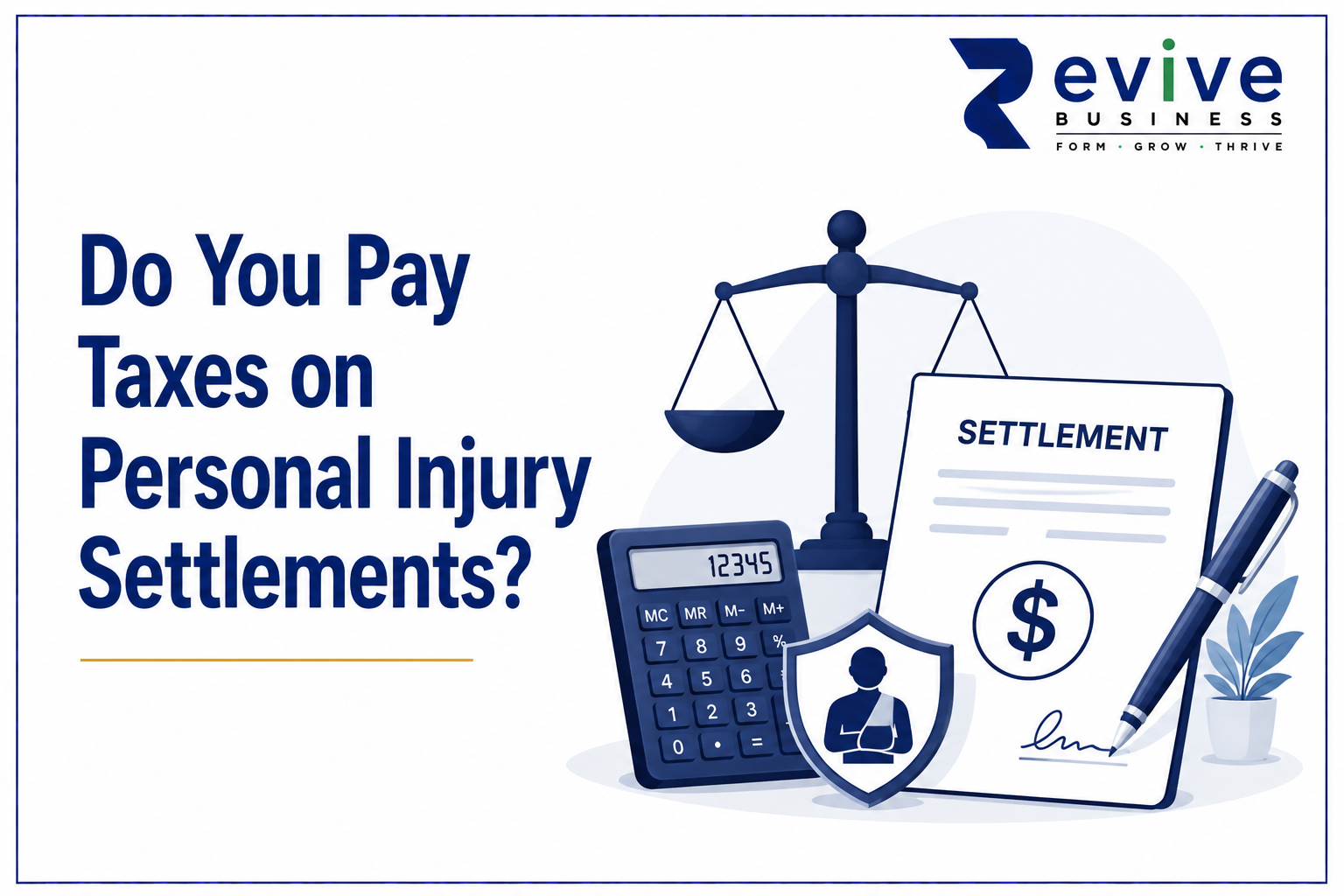
You've just settled a personal injury case. Perhaps it was a car accident, a fall, or an injury sustained at work. After months, if not years, of having to contend with lawyers, insurance adjusters, and medical bills, you have finally got a check in your hands.
Now you're faced with another question you weren't expecting: Is a personal injury settlement taxable?
It's a legitimate question, and the answer isn't always easy. The consequences of getting it wrong can be thousands of dollars in unanticipated tax bills, or potential penalties for underreporting. This guide clarifies it in a readily understandable way so you can determine your position before filing season arrives.
The General Rule: Most Personal Injury Settlements Are Not Taxable
The first word of the saying is good. In general, compensation received for physical injuries or physical sickness is not included in your gross income as per IRS Section 104(a)(2). This means you don't have to pay federal income tax on most of the amount you receive.
This is true for any type of settlement from a car accident, a defective product, a dog bite, or any premises liability case involving physical injury.
But it's not quite as easy as that; some of that money in your settlement is not the same.
What’s Typically Non-Taxable
-
Damages for physical injuries (pain and suffering that is directly related to the body injury)
-
Medical expense reimbursements (unless previously deducted on a tax return; more on this below).
-
Lost wages that are directly related to a physical injury (if any).
-
Property damage; insurance for your car or property is not considered income in the eyes of the IRS.
It's like this: when the money is intended to compensate you for a physical injury, the IRS usually stays out of the picture.
What IS Taxable; And This Surprises a Lot of People
Here's where things get complicated. Certain portions of a settlement are taxable, even if the overall case involved a physical injury.
Punitive Damages
Punitive damages are awarded to punish the defendant, rather than to compensate you. The IRS considers these as taxable income even if you were injured. If there is a punitive part to the settlement, that must be reported.
Emotional Distress and Mental Anguish (No Physical Injury)
Emotional distress damages due to discrimination, defamation, or a hostile work environment are typically taxable if the claim is basically made up of emotional distress. If the emotional distress is caused by a physical injury, however, it is generally treated the same way as the injury itself, which is not subject to taxes.
Interest on Your Settlement
Interest that is earned as a result of a prolonged settlement is taxable income. It will be handled just like bank interest, simply.
Previously Deducted Medical Expenses
This is a surprise. If medical expenses were deducted on an earlier tax return and the settlement covers those medical expenses, then there may be taxable income from the settlement. This is known as the tax benefit rule by the IRS, which states that you can't deduct an expense and receive a tax-free reimbursement.
A Real-World Example
Let's say you were in a serious car accident and received a $300,000 settlement. Here's how it might break down:
|
Component |
Amount |
Taxable |
|---|---|---|
|
Medical expenses (not previously deducted) |
$80,000 |
No |
|
Pain and suffering (physical) |
$120,000 |
No |
|
Lost wages (due to physical injury) |
$60,000 |
No |
|
Punitive damages |
$30,000 |
Yes |
|
Interest on delayed payment |
$10,000 |
Yes |
In this case, $300,000 in settlement is made up of $40,000 taxable income and $260,000 settlement. Unless you expect this, you may end up with an unexpected $8,000–$15,000+ tax bill, depending on your bracket.
This is precisely why the structure of the settlement is important, and why it is better to get professional help before both you and the government finalize and/or file the settlement.
Structured Settlements vs. Lump Sum: Does It Change Your Tax Liability?
In many instances, no, the taxability of the settlement doesn't depend on the form it takes. If the underlying compensation is for physical injury, then a structured settlement that pays you $2,000/month for 10 years is the same as a lump sum.
However, there are other financial planning considerations that should be discussed with a tax professional when considering a structured settlement. The way you receive the funds may impact whether you qualify for some tax benefits or affect your income-based deductions, or tax the income from other investments.
What About Workers' Compensation?
Workers' compensation is an exception. Even if there's no physical harm, workers' compensation proceeds are usually not considered taxable income.
If you are also receiving Social Security Disability Insurance (SSDI) benefits, however, there is a possibility that you may have a taxable situation depending on the offset. It's uncommon, but if yours is such that you do have both, then it's worth calling out.
State Taxes: Don't Forget About Them
This is just one aspect of federal tax law. Each state has its own income tax rules. Most states have the same exclusion rule as the federal government, but a few states have state-specific rules, especially with punitive damages and emotional distress.
In states such as California, New York, or Pennsylvania, however, it's important to verify the state-level regulations to be sure your settlement does not exclude you altogether from taxes.
Steps You Should Take After Receiving a Settlement
The following are the steps you should take when you've been offered a settlement:
-
Ask your attorney to explain it to you. Request a written explanation of each of the portions of the settlement. This documentation is important should you end up facing an audit.
-
Determine whether medical expenses were already deducted. Get the previous tax returns and mark off the expenses that might be eligible for reimbursement now.
-
Separate punitive out-of-pocket damages or interest. These should be reported on your return, usually on the other income section (Schedule 1).
-
Please consult a tax professional before filing. Settlement tax rules are complex, and an incorrect action here isn't just a nuisance; it also may cause penalties and interest.
The tax return filing services we provide are designed to deal with just these types of intricate scenarios, making sure that your settlement earnings are accurately reported and you don't overlook pertinent deductions on your return.
Frequently Asked Questions
Do I need to report my personal injury settlement to the IRS?
Normally, you do not need to report a settlement if it is just for physical damages and does not include punitive damages or interest. If any part is taxable, however, it must be reported on your return. If you need to hire a tax professional or have any questions, document everything.
Will I receive a 1099 for my settlement?
It depends. A defendant or its insurance company can still send out a 1099-MISC with an amount that is not legally taxable. Getting a 1099 doesn't mean that you will be taxed; it means you have to get it right when you file your returns, which will likely require an explanation.
What if my settlement covers both physical and emotional injuries?
Mixed injury settlements are a usual occurrence. The physical injury part is generally excludable, while the distressful part may or may not be, depending on whether it is the same physical injury. Any allocation in your settlement agreement will come into play here.
Can I deduct attorney fees from my settlement?
This area changed significantly after the 2017 Tax Cuts and Jobs Act. In the majority of personal injury cases, attorney fees are deducted from the gross settlement before you get paid, and any tax is applied to your net settlement amount (if any). However, in the case of employment claims, the above-the-line allowance of attorney fees might still be available. A tax expert will be able to guide you through the process if you have any questions.
Does every state have a tax on personal injury settlements?
No. In most states, the exclusion for physical injury compensation is the same as in the Federal Law, but there can be differences in state laws regarding punitive damages and other aspects of settlements. Check your state's treatment at all times.
Final Thoughts
There is no single rule that determines whether a personal injury settlement is taxable. The tax treatment depends on what the settlement compensates for, such as physical injuries, emotional distress, lost wages, or punitive damages.
The injury to physical property exclusion is genuine and substantial, but punitive damages, interest, and miscellaneous already deductedd already will mount up and be considered taxable income.
The smartest move? Have your lawyer provide a written breakdown of what is being covered and what isn't, know the difference, and file accordingly. You don't have to be in a big mess later due to a small cost in getting professional tax advice today.
Need help filing a return that includes settlement income? Our team specializes in complex individual tax situations. Contact Revive Business to get started.