Does Bankruptcy Clear Tax Debt? What Business Owners and Individuals Actually Need to Know
Does bankruptcy clear tax debt? Discover when IRS taxes can be discharged under Chapter 7 or 13, the 3-year rule, and key exceptions for owners.
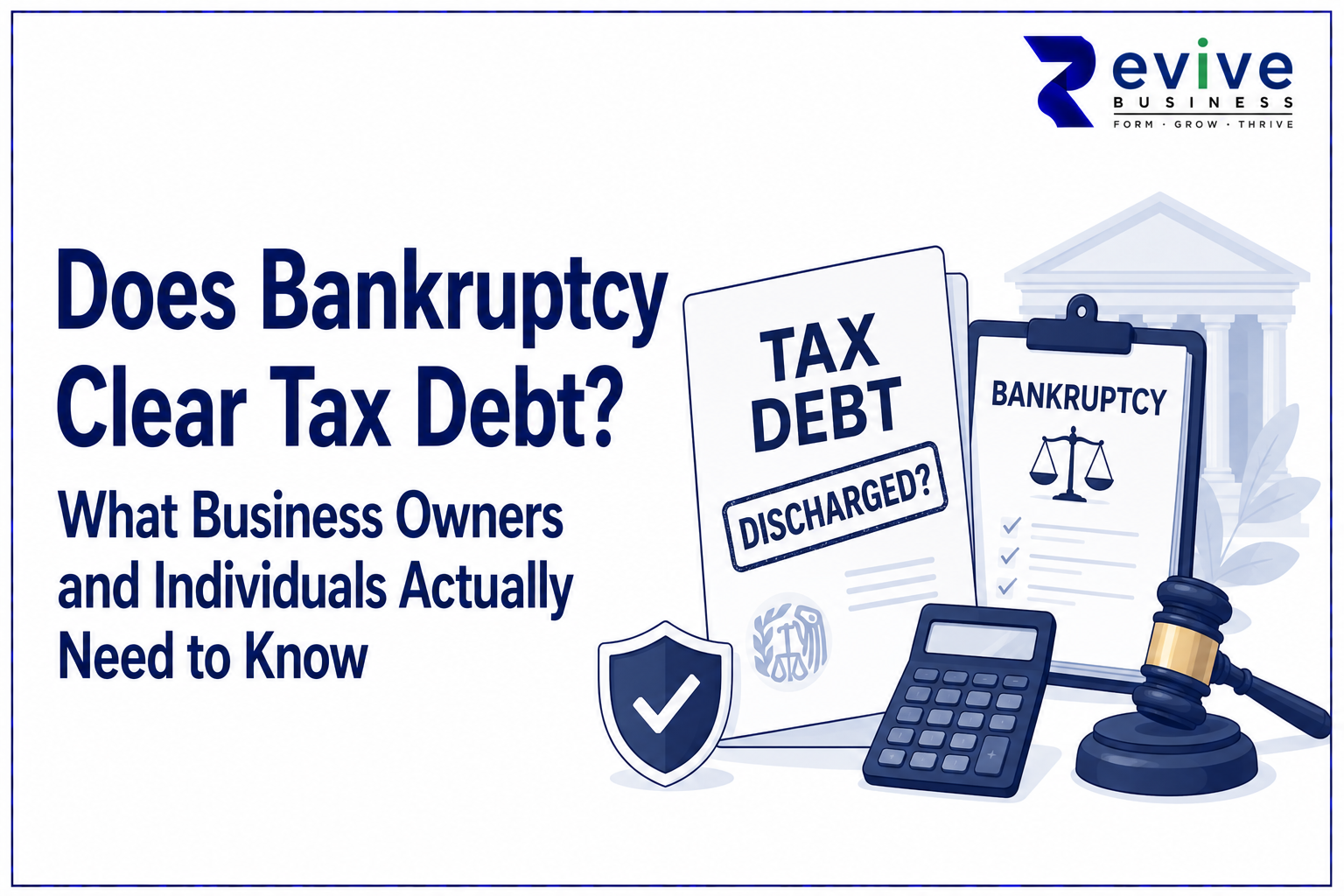
Bankruptcy may seem like the lifeline you've been looking for if you're overwhelmed with tax debt. And while it can be, it's not a blanket solution. The truth is that it's more complicated than it sounds, and knowing the ins and outs of tax debt in bankruptcy could prevent you from making a big mistake.
Most people don't realize that the IRS doesn't walk away when you file for bankruptcy. There are some tax debts that can be discharged, which means they can be erased. Others are not, and they'll accompany you through the bankruptcy process and come out the other side.
This guide explains all the reasons bankruptcy helps with tax debt, the reasons it doesn't, and how to get ahead of the problem before it gets out of hand!
First, Let's Be Clear: Not All Tax Debt Is Equal
The kind of tax debt you have and when you incurred it is critical. There are a number of specific criteria that bankruptcy courts take into account when deciding whether or not to honor a tax obligation.
In general, income tax debt can be discharged in Chapter 7 bankruptcy if all of the following apply:
-
The 3-Year Rule: The tax return must have been due at least 3 years before the bankruptcy filing date.
-
The 2-Year Rule: In fact, you filed the tax return two years before filing bankruptcy.
-
The 240-Day Rule: The IRS determined the tax 240 days prior to you filing.
-
No Fraud or Evasion: Return was filed honestly and without the intention to evade taxes.
-
No Willful Evasion: You did not knowingly try to evade the tax.
Meet all five? There may be a way to discharge your income tax debt. Miss even one? It likely is not.
What Tax Debts Are Never Dischargeable in Bankruptcy?
Certain tax liabilities can't be liquidated, no matter what Chapter you file under in bankruptcy.
-
Understanding payroll tax liabilities is critical here: Payroll taxes (or trust fund taxes) that are deducted from employee wages and not paid to the IRS are virtually never dischargeable. The government considers these funds to be money that's not yours.
-
Penalties for fraud and tax debts in connection with fraudulent returns are fully nondischargeable.
-
Tax debts that don't qualify based on the above time restrictions are not discharged after filing for bankruptcy.
-
Tax liens that were filed before the filing of your bankruptcy case may still be in place even if the debt is discharged.
Real-World Scenario: A restaurant owner in trouble didn't make payroll tax payments to pay for their bills. After all, they declared bankruptcy in Chapter 7 some time later and thought everything was forgotten. It wasn't. The IRS went after the payroll tax debt personally, even after the business had ceased to exist. That's why it's crucial to be aware of payroll tax obligations before a crisis occurs, because the consequences are very serious.
Chapter 7 vs Chapter 13: Which is Better for Tax Debt?
Both chapters are available to assist with tax debt, just in different ways.
Chapter 7: The "Fresh Start" Option
The non-exempt property is liquidated to pay creditors, followed by the discharge of remaining eligible debts in Chapter 7 bankruptcy. If your tax debts fit all the above, then they could be completely wiped out. This process usually takes 3-6 months to complete.
The catch: If you have a lot of assets, they could be liquidated to help pay your debts, including non-dischargeable tax debts, before you get the benefit of your discharge.
Chapter 13: Structured Repayment Plan
Chapter 13 allows you to continue paying your debts over a 3-5 year period while preserving your property. On those that cannot be discharged, it can be a potent weapon as it puts the IRS in a repayment plan and keeps penalties from piling up (to some degree) while the plan is being followed.
It also offers the time, court protection, and freedom from IRS harassment to repay non-dischargeable priority tax debts (such as taxes from the last two years) over time.
The Automatic Stay: Immediate Relief, But Temporary
One of the first advantages of any bankruptcy filing is the “automatic stay.” Once the IRS has filed, the agency is no longer allowed to initiate any actions for collections; no levies, no wage garnishments, no bank account seizures.
This is truly breathing room, and it is valuable. It provides you with time to get things straightened out without the pressure of IRS collection.
The stay is not permanent, however. An IRS petition to terminate the stay allows the IRS to recover the debt after the bankruptcy proceeding, and after your bankruptcy case ends, any tax debt that remains unpaid is due in full.
Why Clean Financial Records Make or Break Your Case
Most bankruptcy guides don't focus on this because it may seem obvious, but the state of your financial documents can significantly impact your outcome.
Under bankruptcy laws, you must fully disclose your finances. If your records are messy, you haven’t reported income, or you’ve recorded expenses incorrectly, you’ll be in court at a serious disadvantage.
Clean bookkeeping for tax records isn't something of a rarity. It is necessary if you want to be able to know which tax debts you can actually eliminate, if you want to create a compelling Chapter 13 plan, show good faith to the court and the IRS, and if you don't want to look like you are guilty of fraud or evasion.
Example: A freelance consultant’s tax situation deteriorated, and he went under with three years of incomplete tax records. Since he did not have sufficient evidence of his tax liability or accurate tax returns, the court had no way to determine which debts were eligible for discharge. What should have been a simple case turned into months of expensive back-and-forth. If he had kept proper tax records, he could have saved thousands of dollars in legal fees and weeks of stress.
Before You File: Steps That Could Change Everything
Bankruptcy is not always the best choice. Before filing, keep in mind the following:
-
Get an IRS Installment Agreement: If you can afford your tax debt, a payment plan could solve your problem without even filing for bankruptcy.
-
Look into an Offer in Compromise: The IRS will accept less than you owe if you meet certain income, expense, and asset criteria.
-
Order your records: (Accurate, complete books are the basis of any resolution strategy)
-
Get advice from a professional with an understanding of both tax law and bankruptcy: There is an intersection of tax and bankruptcy that can be confusing even for seasoned professionals.
There's generally a right way to do things, which relies on your situation: your debt, how much you make, whether it's a lien from the IRS, and more. That's why it's best to consult a business tax expert before taking any action.
Need Help Navigating Tax Debt in Bankruptcy?
At Revive Business, we assist business owners and individuals to get a handle on their tax situation, from bookkeeping for tax records to resolution planning. Our team is available to discuss your situation and speak with a business tax expert without any guesswork and no answers that are “one size fits all”.
Make an appointment to see Revive Business today.
Frequently Asked Questions
Can the IRS still collect from me after I file for bankruptcy?
Upon filing, the automatic stay takes effect, and the IRS is required to cease collection. However, if the tax debt isn't dischargeable, collection resumes once the bankruptcy ends. In some cases, the IRS may file a motion to remove the stay with the court.
How IRS Tax Liens Affect Bankruptcy?
This is one of the most frequent mistakes. An IRS tax lien placed before your filing may not be discharged by a Chapter 7 discharge, but the discharge will eliminate your personal liability for the tax debt. Your property can still be subject to the lien. Typically, a lien must be resolved in a separate legal proceeding.
I own a small business. Can bankruptcy help with my business tax debt?
This will depend on your business structure and the nature of the debt. Sole proprietors have more flexibility since personal and business debts are intertwined. Outstanding payroll taxes will typically not be dischargeable, irrespective of your structure. This is not something to do alone; we highly recommend that you speak with a business tax expert.
Do I need to list every tax debt that I owe in the bankruptcy papers?
Yes. All debts, including tax debts, must be disclosed in bankruptcy. Even if you forget or miss debts, it can cause big legal issues and potentially be a barrier to getting discharged.
I haven't filed tax returns in a few years. Is it still possible to file tax debt in bankruptcy?
Maybe it's complicated. Unfiled returns are a big red flag. A tax debt is usually only dischargeable if the tax return was filed within two years of the date the bankruptcy petition was filed. Those will probably need to be filed first, and then held for the waiting periods following. Another of the reasons to have clean bookkeeping for your tax records from the outset.
What's the difference between tax debt discharge and tax debt forgiveness?
When you file bankruptcy, you cannot be held liable by the IRS, and you are no longer obligated to pay the debt. The term forgiveness, as in an Offer in Compromise, refers to a type of settlement that is negotiated with the IRS, separate from bankruptcy. Both will have tax and financial consequences, and a professional can help you decide which will be more beneficial to you.
Final Thoughts
In bankruptcy situations, that's a definite possibility, but only if the tax debt in bankruptcy is the right type of bankruptcy, done at the right time, and with all the proper documentation to support all of the claims.
Those who plan, maintain organized records, and seek professional guidance before they are in trouble will reap the most rewards from the business owners and individuals.
That's what we help you do at Revive Business Filing. From clean bookkeeping for tax records to help with understanding payroll tax liabilities, or simply to consult and speak with a business tax expert who will give you straight answers, we're here.
Visit Revive Business to get started.