How Much Does It Cost to Get an LLC in Texas, and What Else You Need to Know
Learn how much an LLC costs in Texas, including the $300 Secretary of State filing fee, registered agent fees, name reservation, and franchise tax rules.
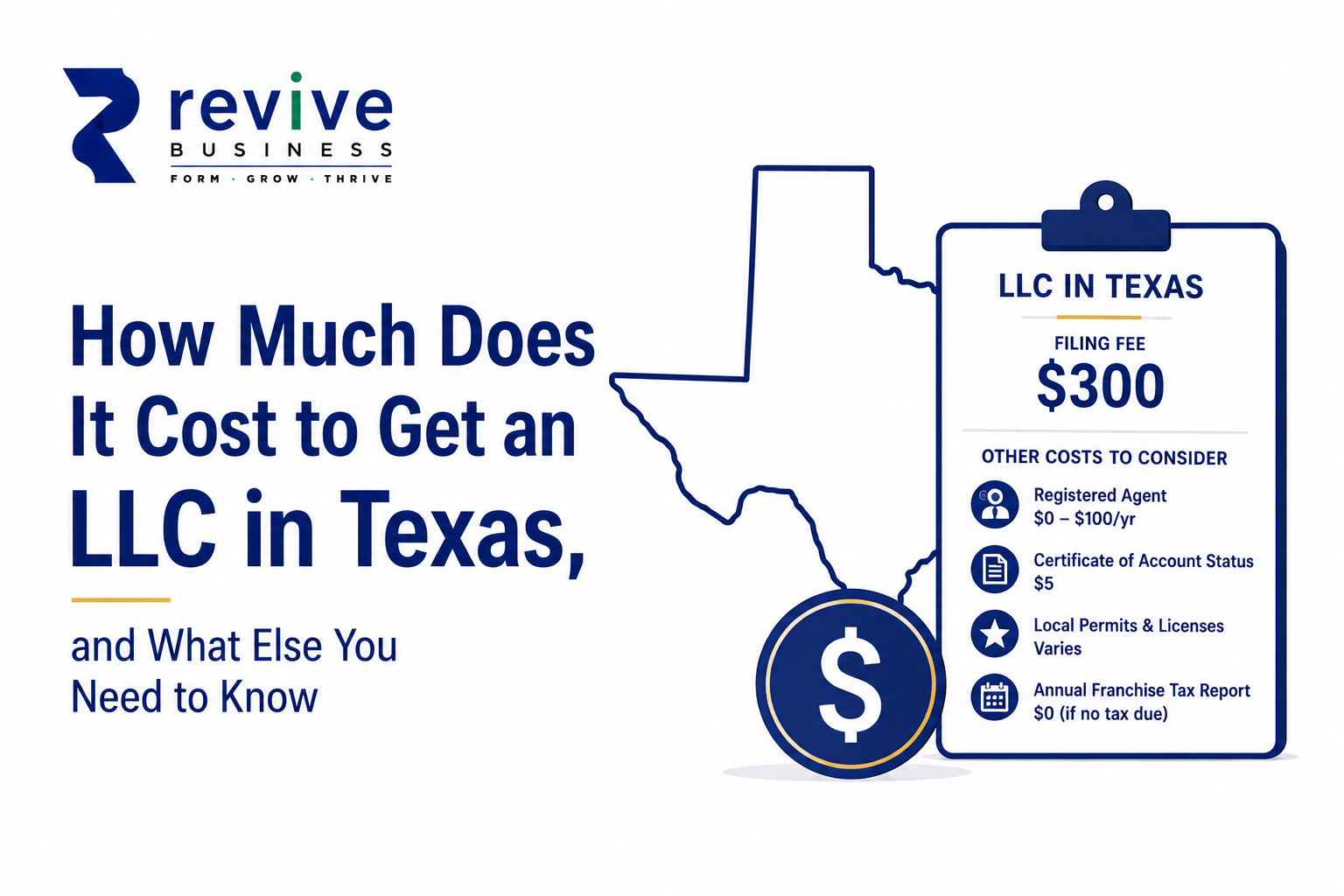
Wondering how much it costs to start an LLC in Texas? The minimum cost is $300, which covers the Texas Certificate of Formation filing fee. However, depending on whether you hire a registered agent, purchase an operating agreement, or use an LLC formation service, your total startup costs can range from $300 to over $800.
Before you jump right in, however, you should be familiar with the cost and other requirements of creating an LLC in this state. Let's make it simple.
|
Expense |
Typical Cost |
|
Certificate of Formation |
$300 |
|
Registered Agent |
$0-150/year |
|
EIN |
Free |
|
Operating Agreement |
$0-$500 |
|
Formation Service |
$0-$300+ |
|
Licenses |
Varies |
The Core Cost: State Filing Fee
The first and most obvious answer to the question of LLC startup expenses how much LLC startup expenses in Texas begins here, with the filing fee of $300 with the Texas Secretary of State at the time you file for your Certificate of Formation.
The $300 filing fee is the mandatory state cost. Your total expenses depend on the additional services you choose.
Comparatively, other states require $50 to $150 to file. The state of Texas is on the high end, but with no personal income tax, no franchise tax for the majority of small LLCs, and a huge market, most business owners feel it's well worth it.
Is Texas a Good State for an LLC?
Entrepreneurs who want to start and run a business will find Texas one of the best places to do so, which is why it's a good choice for forming an LLC. The state requires a $300 filing fee, which is more expensive than some other states, but in the end the benefits can be worth it.
A Texas LLC offers many advantages, such as:
-
No personal state income tax: Texas doesn't have a personal income tax, so business owners keep more of their profits.
-
Business-friendly environment: the state has a solid legal system, a regulatory climate that is business-friendly, and a large customer base.
-
Texas has one of the nation's largest and fastest-growing economies, opening opportunities for businesses in all sectors.
When considering how to start your LLC, it may be most useful to do so in Texas if you intend to keep your business here.
Other Costs to Factor In
The filing fee is only $300. Other expenses to consider:
Registered Agent Service: $0–$150/year
Texas laws mandate that every LLC must have a registered agent, who has a physical address in Texas, that receives legal service on the LLC's behalf. Most business owners, however, opt to use a professional registered agent service, with fees of $50 to $150, which ensures that a business owner's private address is not listed on public records and that nothing is overlooked.
Operating Agreement: $0 to $500+
While an operating agreement is not required by law in Texas, Although not legally required, having an operating agreement is strongly recommended. If you draft it yourself, it is free! It will cost $300–$500 or more if you hire an attorney to write it. This document is a must-have for multi-member LLCs in particular.
EIN (Employer Identification Number): Free
Apply directly with the IRS website at no cost. This is required for opening a business account and tax purposes.
Business Licenses and Permits
There isn't an overall license for business in Texas, but some industries, like construction, food service, and healthcare, require a state or local license. Check with the Texas Department of Licensing and Regulation for your specific requirements.
LLC Formation Services: $0–$300+
There are basic packages that cost under $100, plus the state filing fee, and other services that incorporate operating agreement templates, EIN registration, and compliance reminders, among other services.
Is it possible to do an LLC on your own?
Yes. Numerous business owners are able to establish their own Texas LLC without the help of a lawyer. This choice will be influenced by your business desires and budget, along with your own legal skill level.
DIY Filing
If you have a simple ownership structure for your Texas LLC, you can file the Certificate of Formation on your own with the Texas Secretary of State. This is the most affordable option since you'll only pay the mandatory state filing fee.
Using an LLC Formation Service
For those who don't want to go through the hassle and risk of making mistakes, an LLC formation service can do the filing for you. There are also additional features that some services provide, like registered agent services, operating agreement templates, EIN help, and compliance reminders.
Hiring an Attorney
If your business has more than one owner, outside investors, an intricate ownership structure, or legal requirements that are unique to your industry, you may benefit from advice from an attorney. While the most expensive, it can go a long way in avoiding future costly legal problems.
The Ongoing Cost People Forget: Texas Franchise Tax
This is one thing that many new business owners miss. Most Texas LLCs do not owe franchise tax because they fall below the annual "No Tax Due" revenue threshold, although they are generally still required to file the appropriate annual report.
This is not your typical federal and state income taxes that you have come to expect. Ensure that you get revenue from day one to avoid any surprises at tax time. That's where accounting services come in handy; a professional accountant will ensure that your books are clean, monitor your franchise tax exposure, and ensure that you are filing the right reports on time.
Hidden Costs of Forming an LLC in Texas
The initial cost of filing in the state is the highest up-front cost, but there are a series of ongoing costs that new business owners may not be aware of. Being prepared for these costs can save you from being surprised by out-of-control costs in the future.
Annual Compliance
Texas LLCs not paying taxable income will generally be required to file the necessary franchise tax reports to keep them in good standing, even though they are not taxable income.
Business Bank Account
It is crucial to keep your personal and business finances separate to preserve your LLC's liability protection. Some banks have minimum balance conditions in order to waive their monthly maintenance fees.
Accounting Software or Bookkeeping
Keeping financial records should make tax filing easier and aid in tracking the performance of your business. This is a continuing business expense, whether you are using accounting software or have a bookkeeper.
Business Insurance
A general liability, professional liability, workers' compensation, or commercial property insurance policy may be required depending on your industry. Insurance provides a layer of security against unforeseen claims and losses to your business.
DBA (Doing Business As) Filing
If your LLC is going to do business under a name other than its Legal Name, you will need to file an Assumed Name Certificate (also known as a DBA). The county or jurisdiction determines filing fees.
Business Licenses and Local Permits
Texas does not impose a general statewide business license, but there are many industries and local governments that do. The costs are dependent on your business and its location.
When you add these costs to the filing fee, you'll have a better sense of how much it's going to cost you to form and run an LLC in Texas.
Why Getting the Setup Right Matters
An actual situation: Imagine a consultant creates an LLC without an operating agreement, enters their home address as the registered agent, and fails to file franchise tax because they "did not make much. Two years later, they have a default judgment from a lack of legal notice and a penalty notice from the TX Comptroller.
That is all inexpensive to prevent. It's a costly repair job.
The right foundation- filing, using a registered agent, an operating agreement, and someone to keep the books- is an inexpensive cost to avoid when you have a compliance problem later.
Cost Comparison
|
State |
Filing Fee |
|
Texas |
$300 |
|
Florida |
$125 |
|
Califrnia |
$70 |
|
Delaware |
$110 |
How Revive Business Can Help
Whether you're forming your first LLC or switching from a sole proprietorship, our team can help you handle formation, registered agent services, bookkeeping, and ongoing compliance, so you can focus on growing your business.
We handle the paperwork behind the scenes, keep track of your deadlines, and ensure you are not surprised by anything Texas-specific that you need to fill out, such as the franchise tax report.
Frequently Asked Questions
How long does it take to form an LLC in Texas?
The Texas Secretary of State's office will process online filings in 3–5 business days. There is expedited processing (same day or 24 hours) available for an extra charge.
Can I be my own registered agent in Texas?
Yes, as long as you have a real Texas address and can be found during business hours. For privacy and reliability, many owners opt to use a third-party service.
Do I need a lawyer to form an LLC in Texas?
Not legally. Many people submit themselves or have to utilize a formation service. Outside investors, multiple LLC members, or complicated LLC ownership agreements, however, make securing legal counsel worthwhile.
Does Texas require an annual report for LLCs?
Unlike the usual annual report, Texas does not require an annual report for LLCs, although the firm is required to file a report of franchise tax each year even if no tax is due.