How to Register Your Online Business: A Step-by-Step Guide
Learn how to register your online business in 2026. Step-by-step guide covering legal structures, LLC filings, EINs, permits, and tax compliance.
If you're starting an online business, registering it properly is one of the most important steps you can take. Choosing the right business structure, obtaining the necessary tax IDs, and meeting state requirements can help protect your personal assets, reduce legal risks, and position your business for long-term growth.
This guide explains what you need to do, in the proper order, to begin legally and put yourself on the path to success.
Why Registration Actually Matters
Many first-time business owners treat business registration as a formality. It isn't.
You sign up your business when you:
-
Separate personal and business finances, helping protect your personal assets from business liabilities.
-
Open a business bank account and access financing opportunities. Most banks require business registration documents and an EIN before opening an account.
-
Stay compliant with federal and state tax requirements and reduce the risk of penalties for late registrations or filings.
-
Build credibility with customers, vendors, payment processors, and potential business partners.
A real example: Consider a freelance designer earning $80,000 annually. Without a formal business structure, personal assets may be exposed to legal claims, and valuable tax planning opportunities could be missed. Establishing the proper business entity early can help reduce these risks.
Documents You'll Need Before Registering Your Online Business
To facilitate business registration, compile the necessary information beforehand to prevent delays and inaccuracies in the registration process:
-
Business Name: Check if the business name you'd like is available in your state; you can also choose to get the matching domain name.
-
Business Address: For business registration and tax requirements, most states require a physical business address.
-
Owner Information: Names, addresses, and contact details for all owners, members, or partners.
-
Registered Agent Information: If you are starting up an LLC or corporation, you will have to designate a Registered Agent who will accept legal and government documents on your business's behalf.
-
Business Purpose: For most registration forms, you need to enter a short description of your business activities, products, or services.
-
Employer Identification Number (EIN): If your business structure requires it, you might need an EIN from the IRS for tax purposes, bank accounts, and hiring employees.
This information will aid in the quick registration procedure and start your online business on a proper legal footing.
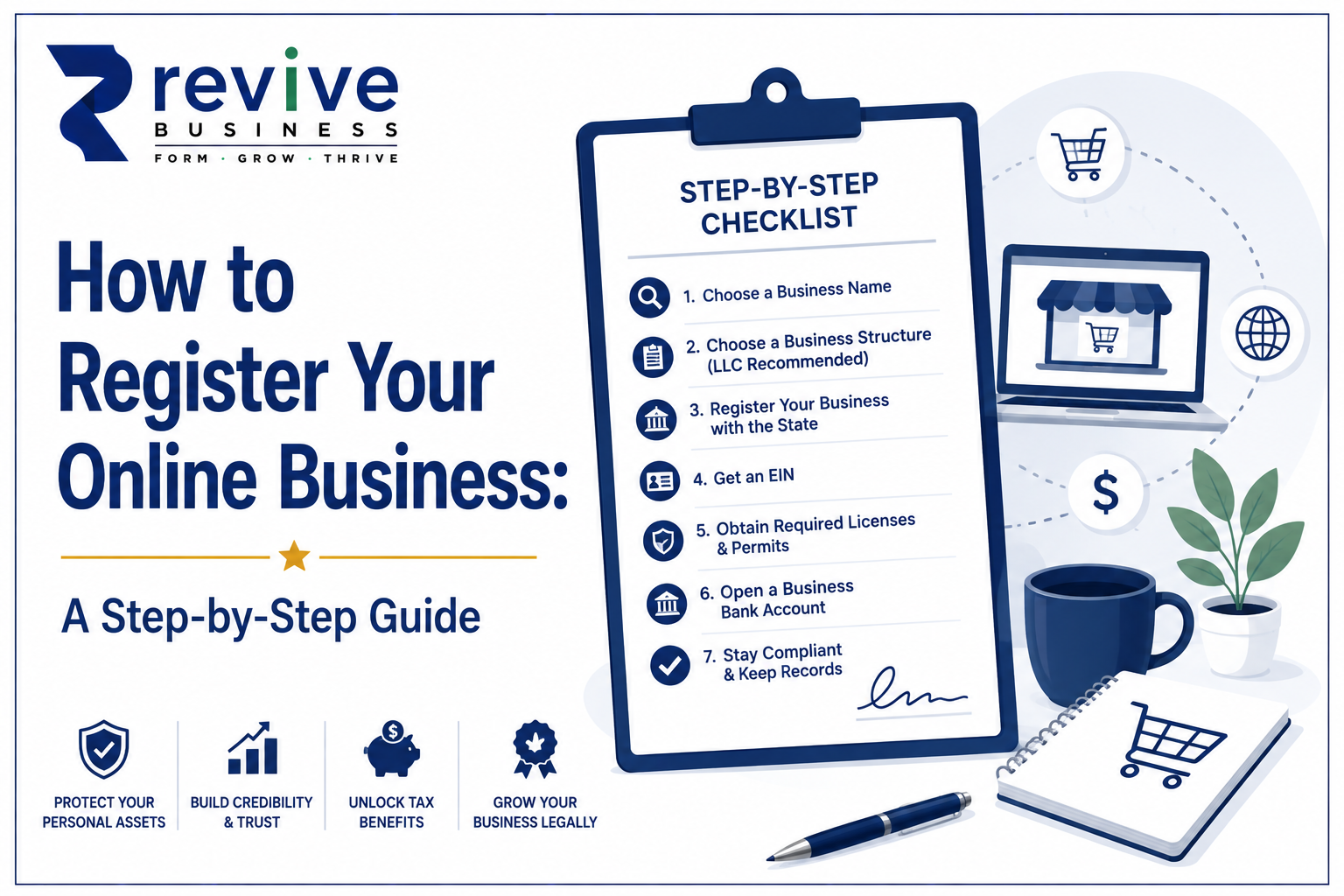
Step 1: Choose Your Business Structure
This is the most critical choice you'll be making during registration. The structure will have a significant impact on liability, taxes, and the ability to raise funds in the future.
Here's a quick overview:
-
Sole Proprietorship: easiest to establish, but you are personally liable for all the business's obligations. Not suitable for growth; works for very early-stage freelancers.
-
LLC (Limited Liability Company): the most common business entity for online businesses. Safeguards personal assets and offers flexible tax treatment; relatively easy to maintain.
-
Partnership: A partnership can be a practical option when starting a business with one or more co-founders. However, partnerships come with shared liability and additional tax filing requirements.
-
S Corporation or C Corporation: These structures are often used by businesses planning to raise investment capital, issue shares, or scale aggressively.
For many online businesses, an LLC offers an attractive balance of liability protection, tax flexibility, and administrative simplicity.
Step 2: Register Your Business Name
When you begin the process, be sure that your business name is available first. Search:
-
Your state's business entity database (usually on the Secretary of State's website)
-
The USPTO trademark database at tmsearch.uspto.gov if you want federal protection
-
Your preferred domain name; even if you're not launching a website immediately
If you're operating under a name different from your legal business name, you'll also need to file a DBA (Doing Business As), sometimes called a fictitious name or trade name registration.
Step 3: Register with Your State
LLCs and corporations are registered at the state level. The process usually consists of:
-
Filing your Articles of Organization (LLC) or Articles of Incorporation
-
Payment of a state filing fee - which is typically $50-$500 depending on the state.
-
Appointing a registered agent is someone or a service that will accept official legal documents on your behalf.
-
While states such as Wyoming and Delaware are known for business-friendly laws, most online entrepreneurs should register in the state where they primarily operate. Registering elsewhere may require additional filings and fees as a foreign entity.
Many entrepreneurs choose professional business registration services to avoid filing errors, missed deadlines, and compliance issues that could delay approval.
Step 4: Get Your EIN (Employer Identification Number)
An Employer Identification Number (EIN) is a unique federal tax identification number issued by the IRS for your business. You need it to:
-
Open a business bank account
-
File federal taxes
-
Hire employees
-
Apply for business license(s)
You can apply for an EIN for free through the IRS website; it takes about 10 minutes.
Step 5: Get the Right Licenses and Permits
Depending on your industry and location, you may require:
-
A general business licence from your city or county
-
A sales tax permit, if you are selling tangible products (for sales tax purposes)
-
Industry-based licenses (food, finance, healthcare, etc.)
The SBA's licensing tool helps you identify what applies to your specific business.
Don't Forget Ongoing Compliance
Registering your business is only the first step. Maintaining ongoing compliance is essential for keeping your business in good standing and avoiding penalties.
This includes making an annual report to your state, paying estimated quarterly taxes, and maintaining clean financial records. This is where many small business owners have problems, and where small business accounting and bookkeeping is not just a suggestion, but a must.
If books are disorganized, there will be deductions that will be missed; inaccurate tax filing; and April chaos. Just a simple system (separate business bank account, monthly accounting, and keeping track of expenses) makes a difference.
Frequently Asked Questions
Do I need to register my online business if I'm just freelancing?
In many states, you can operate as a sole proprietor without formally creating a business entity. However, registering an LLC or corporation may provide important legal and financial protections as your business grows.
Can I register my business online?
Yes. The majority of states conduct their business registration on their state's business website.
What's the difference between an LLC and a partnership for tax purposes?
An LLC with more than one member is presumed to be taxed as a partnership, which means that the LLC income is passed through to the members. Form 1065 is also required to be filed annually with the IRS by partnerships. With their expertise, a CPA can assist you in determining which structure will suit you better, depending on your plans and revenues.
How much does it cost to register a business?
Total startup costs vary by state. Many entrepreneurs pay between $50 and $500 in state filing fees, while optional registered agent services may cost between $50 and $300 annually.
Can I Register an Online Business Without an LLC?
Yes. Many online businesses begin as sole proprietorships. However, forming an LLC can provide liability protection and help separate personal and business finances as revenue grows.
Ready to Get Started?
Registering your business doesn't have to be complicated, but it does need to be done right. Whether you're launching solo or with a partner, getting the foundation right now saves you from expensive problems later.
At Revive Business, we help entrepreneurs handle business registration, ongoing compliance, and financial management, so you can focus on building, not paperwork. Whether you're forming an LLC, obtaining an EIN, or navigating state registration requirements, getting expert guidance can help you avoid costly mistakes and launch with confidence.