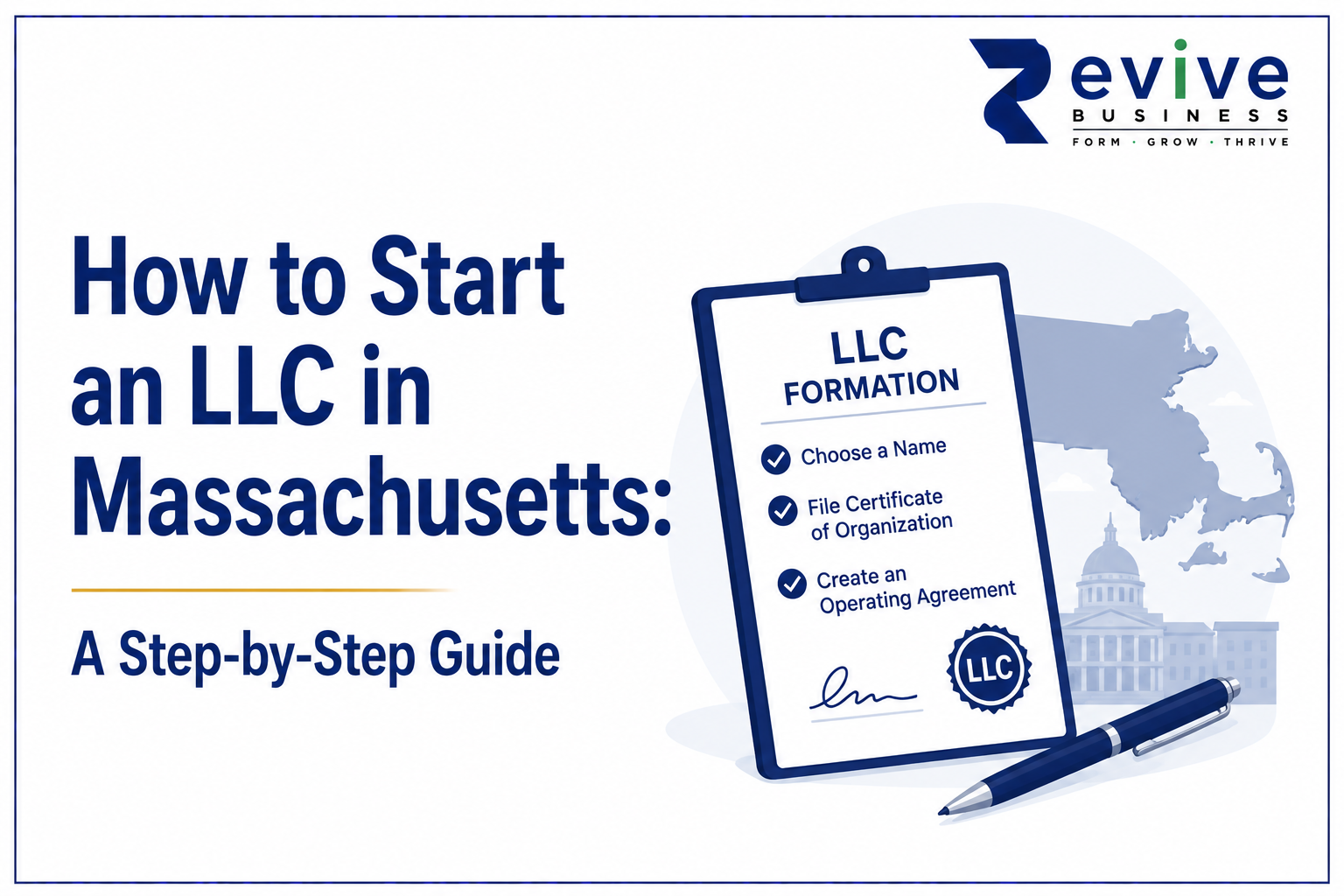
How to Start an LLC in Massachusetts: A Step-by-Step Guide
Learn how to form a Massachusetts LLC in 2026. Step-by-step guide covering Secretary of the Commonwealth filings, $500 state fees, and resident agents.
The idea of starting a business is thrilling in Massachusetts, but it is important to have the structure correct from the beginning. Being in Massachusetts, LLC formation affords you protection from liability, pass-through taxation, and a legitimate business presence. And the good news? When you're familiar with the process, it's easy.
This guide will take you through all the steps, from choosing a business name to remaining compliant after your LLC is approved.
Why Form an LLC in Massachusetts?
It's important to know what it is you're getting into before jumping into the steps.
An LLC (Limited Liability Company) protects your personal assets from business liabilities. Therefore, your savings, car, or home are typically safe if your business is sued or unable to pay back a debt.
In addition to the liability coverage, an LLC in Massachusetts provides:
-
Flexible management structure: you can run it yourself or bring in managers
-
Pass-through taxation: profits flow to your personal return, avoiding double taxation
-
Credibility: clients, vendors, and banks tend to take registered businesses more seriously
If you're a freelancer, consultant, or small business owner in Massachusetts, forming an LLC is usually the smartest first move.
Step 1: Choose a Business Name
Your LLC name must be different from any other LLC name in Massachusetts and must end with the words "Limited Liability Company," "LLC," or "L.L.C.
Before you fall in love with a name, check the Massachusetts Secretary of State's business name database to make sure it's available.
Here are a few tips on how to do this:
-
Do not use names that are close to those of other businesses that already exist; the state may reject them
-
If you're not planning to launch a website right away, check to see if the domain name is available.
-
If you plan to trademark the name later, run a quick search on the USPTO trademark database
Step 2: Appoint a Registered Agent
All LLCs in Massachusetts have to maintain a registered agent, which is actually a person or organisation who has a physical address in Massachusetts that is used for receipt of official legal documents and government notification.
One may be a registered agent; however, many business people would prefer to use a registered agent service. Here's the reason: The address of your registered agent service is part of the public records. A service provides you with a private home address, which means that someone will always be there during business hours to receive documents, even if you are traveling or away.
This is especially important if you're served with legal papers. If no one is home, there may be grave consequences for missing a notice.
Step 3: File the Certificate of Organization
This is the official document that creates your LLC. In Massachusetts, it's called the Certificate of Organization, and you file it with the Secretary of the Commonwealth.
Filing details:
-
Fees: $500 (Please check the state website for the current fees; this information is subject to change)
-
Filing method: Online or by mail.
-
Processing time: Online filings are usually completed sooner
The Certificate of Organization requires the basic information: Your LLC name, principal address, registered agent information, and the names of your managers or members.
After approval, a stamped copy will be sent back from the state. Save it; you will need it at the time of opening a bank account or applying for financing.
Step 4: Create an Operating Agreement
While Massachusetts is not a jurisdiction that requires an operating agreement, it is a good idea to have one anyway.
An operating agreement is an internal document that outlines your LLC's operations, including rules about profit distribution, what happens when a member leaves, and how decisions are made. If you don't, your LLC will revert to Massachusetts state laws, which might not be what you are looking for.
If, for instance, you and a partner invest varying amounts of money, but you wish to split profits evenly, then you must have an operating agreement in place to reflect this. If not, things can get messy quickly.
For LLCs with only one member, it also helps to further separate you from your business, in case they ever get into trouble.
Step 5: Get Your EIN from the IRS
An Employer Identification Number (EIN) is a Social Security number for your business. You'll need it to:
-
Establish a business account in your name.
-
File federal and state taxes.
-
Hire employees
-
Obtain licenses or permits for a business.
The good news: getting an EIN is free and takes about 10 minutes through the IRS website.
Step 6: Handle Taxes and Compliance
This is where lots of new LLC owners get taken aback.
Massachusetts has its own tax requirements on top of federal obligations. If your LLC has employees or pays contractors, you'll need to register with the Massach usetts Department of Revenue and stay current on:
-
State income tax (pass-through to members)
-
Sales tax (if you sell taxable goods or services)
-
Payroll taxes (if you have employees)
Self-managing payroll tax services can be tedious and complex. There are deadlines to file withholding in Massachusetts, and failure to pay the penalties escalates. Many business owners feel it is worthwhile to have payroll outsourced early on rather than scrambling to rectify payroll errors later.
Step 7: File Your Annual Report
All LLCs must submit an annual report to Massachusetts to maintain good standing. Massachusetts requires LLCs to file their annual report by the anniversary date of the LLC's original formation each year.
-
Filing fee: $500
-
Filing date: Online via the Secretary of State's website
Failure to do so could result in your LLC being declared “not in good standing” and may impact your financial opportunities, contract negotiations, or even the future dissolution of the business you've established.
Should You Use an LLC Formation Service?
If all this sounds daunting, but you're a business owner, you're not the only one.
Professional LLC formation services will take care of the paperwork, filing, and compliance tracking procedures for you. They are usually packaged with services such as registered agent services, document storage, and annual report reminders, so you don't forget important deadlines.
This might be particularly useful for people who are establishing their LLCs from afar, own multiple businesses, or simply wish to concentrate on business development and not the paperwork associated with states.
Common Mistakes to Avoid
-
Using a personal address as your registered agent address; it becomes public record.
-
Failing to put together an operating agreement. Particularly risky in multi-member LLCs
-
The quickest and surest way to lose liability protection is to combine your personal and business funds.
-
Failure to file the annual report by the deadline; this $500 report filing fee will be a price you don't want to pay twice (once for the report and once to reactivate a dormant LLC)
Frequently Asked Questions
What is the timeframe for LLCs in Massachusetts?
Typically, online filings are done in 1-3 business days. The processing time for a mail filing is 2–4 weeks.
What are the LLC formation costs in Massachusetts?
The filing fee for this State is $500. In addition, there is a report fee of $500 per year for maintaining your LLC.
Do I need a lawyer to start an LLC in Massachusetts?
Not necessarily. Numerous LLCs are not formed with the assistance of a lawyer. If you do have a business structure or partners and investors, though, an attorney should examine your operating agreement, as it will be worth your while.
Can I be my own registered agent in Massachusetts?
Yes, as long as you have a physical address in Massachusetts and can be reached during normal business hours. A registered agent service can be selected for privacy and convenience by many business owners.
What taxes does an LLC pay in Massachusetts?
Single-member LLCs are typically taxed as sole proprietorships, and multi-member LLCs as partnerships, with profits reported on members' personal tax returns. Massachusetts LLCs should also account for the state's minimum $456 corporate excise tax and any applicable sales tax registration requirements.
Ready to Get Started?
You don't have to be a complicated process to start an LLC in Massachusetts; however, you have to be detail-oriented. Whether it's naming your business, designating a registered agent, or keeping your business up to date with annual paperwork and payroll requirements, every step creates a strong, secure business.
At Revive Business, we help entrepreneurs and small business owners navigate LLC formation, registered agent services, and ongoing compliance, so you can focus on what actually matters: building your business.
Ready to form your LLC the right way? Reach out to our team, and we'll handle the details.