LLC vs LLP: Which Business Structure Actually Fits Your Situation?
Compare LLC vs LLP to understand personal liability protection, tax differences, partner roles, state rules, and which structure best fits your business.
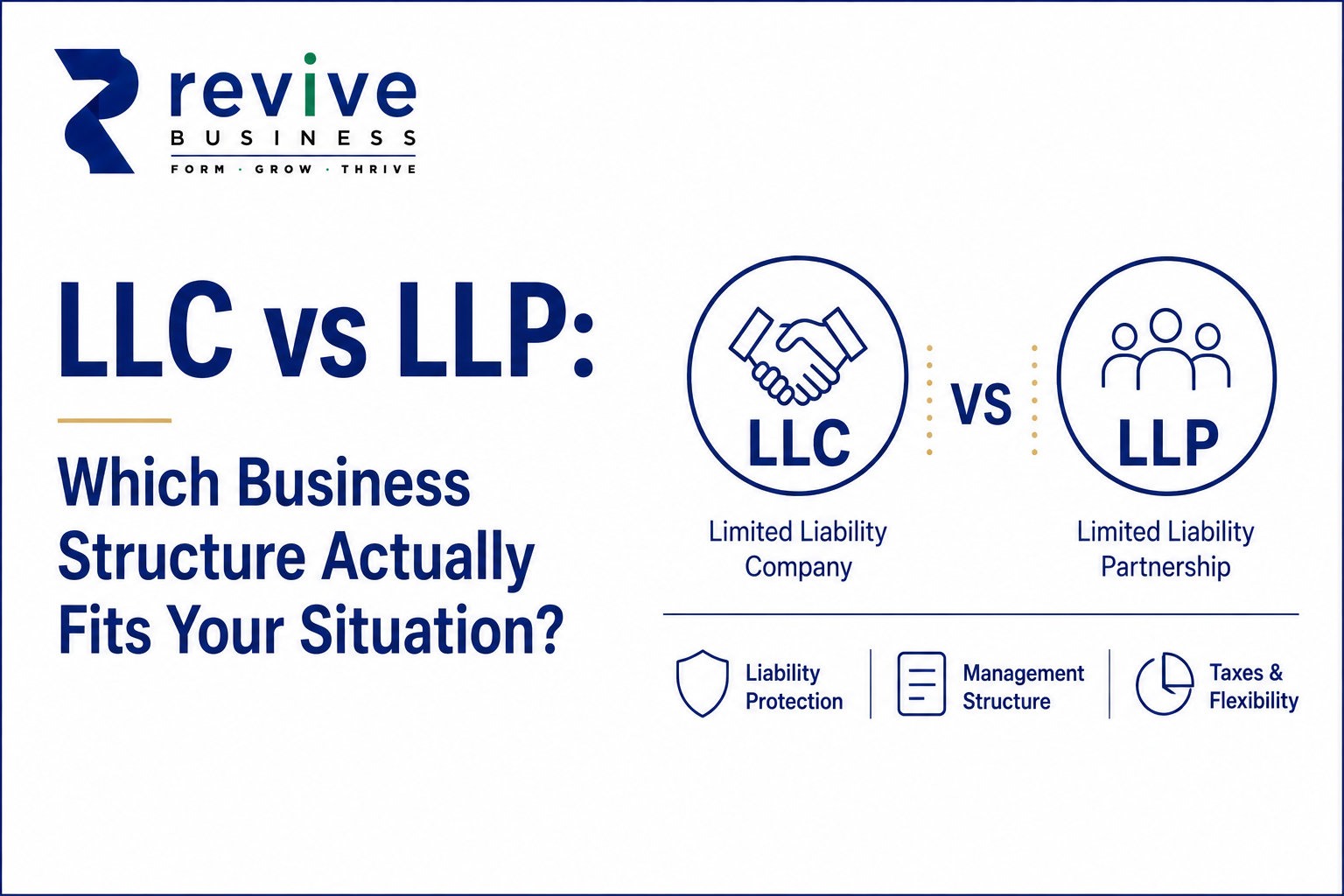
You might think it's a simple choice between LLCs and LLPs, but when it comes to signing the paperwork, it's not so simple. Both provide liability coverage. Both have provisions to prevent double taxation. However, the similarities end there, as most people realise.
Ideally, it's not the more upscale-sounding one, but rather the one more relevant to your business's day-to-day functions. Here's how to think through the decision without getting lost in legal jargon.
The Core Difference: Who's Protected, and From What
Whether an LLC has one owner or twenty, all of its members are generally protected from personal liability for the company's debts and lawsuits.
An LLP offers similar liability protection to an LLC, but it was designed for partnerships, usually composed of licensed professionals. Generally, partners are not liable for the negligence of other partners, but the extent of the protection depends on the state.
For a law firm that is organized as an LLP, for example, if one partner gets a malpractice lawsuit, the others' assets are generally shielded from the claim. But typically each partner is still responsible for his or her own professional conduct.
This is a significant difference. LLPs generally protect partners from being personally liable for another partner's negligence, but not necessarily their own.
Who Can Actually Form Each One
That's where the decision usually makes itself.
LLCs can be formed by virtually any kind of business:
-
Freelancers and solo consultants
-
E-commerce and retail companies
-
Real estate investors
-
Multi-member startups
-
Professional service providers (in many states)
LLPs, however, are limited to a few licensed professionals, namely:
-
Law firms
-
Accounting firms or CPA firms
-
Medical and dental practices
-
Architecture firms
For those who don't specialize in a licensed profession, an LLP may not be an option. Before deciding, check your state's specific business entity requirements to determine which option is available.
Management Structure: Flexibility vs. Partnership Norms
LLCs provide significant management flexibility. They can be managed by their members or by appointed managers.
An LLP is structured like a partnership. Management decisions in an LLP are typically made jointly by the partners.
For example, four architects starting a firm together may want equal input into major decisions and expect to admit new partners over time. In that scenario, an LLP is often a natural fit, as it is structured around this very type of continuous partnership. On the other hand, a tech start-up with one founder and three investors finds it preferable to have an LLC because of its flexible ownership structure.
Taxation: More Alike Than You'd Think
In both cases, the pass-through taxation structure is the norm. Neither entity is automatically subject to federal income tax at the entity level. Rather, profits and losses are passed on to the owners on their personal returns.
Where things diverge is in the details:
-
LLC owners can elect S corporation or C corporation tax treatment if it is advantageous.
-
LLPs generally have fewer tax election options than LLCs because they are typically taxed as partnerships.
-
Self-employment tax treatment may vary by individual partner's role and involvement in the business.
Tax treatment can become complex quickly, particularly if there are several partners or members involved, so it can be beneficial to work with a qualified accounting services provider early in the process to avoid costly mistakes when filing. A small decision during the startup stage can significantly affect your taxes for years to come.
Compliance and Other Requirements
Neither structure is a "set-it-and-forget-it" business entity. Both typically require:
-
Annual reports or renewal filings (based on state)
-
Compliance with your state's Secretary of State requirements.
-
Maintaining accurate financial and business records.
This is where a reliable registered agent service comes in handy. If your business misses an important state notice because your registered address is outdated, you could face penalties or even administrative dissolution.
So, Which One Should You Choose?
Let yourself ask these questions:
-
Do you work in a licensed profession? If so, and your state permits it, an LLP may be your preferred partnership structure.
-
Do you want flexibility in management (such as non-owner managers)? Generally, LLCs offer greater flexibility in this area.
-
Do you have a small team or are you a one-person operation without professional licensing needs or standards? In almost all cases, an LLC is the most convenient and flexible option.
-
Do you want broader personal liability protection? In most cases, an LLC provides stronger protection for individual owners.
For most small businesses outside licensed professions, an LLC is the more practical choice.
Getting the Formation Right
No matter which structure is best, the details of the formation process matter. The choice of state, operating agreements, and ownership documents all impact the protection that the entity will provide you in the long run.
An experienced LLC formation service provider will ensure that the paperwork is accurate, and it will reflect how your business actually operates. Not a generic template. That is an important distinction should you be called upon to testify in court or in an audit.
Frequently Asked Questions
Can an LLC be changed to an LLP and vice versa?
Yes, in most states, but usually, such a maneuver involves creating a new entity and merging or converting the existing business into it.
Is an LLP less expensive to maintain than an LLC?
Not necessarily. Costs vary according to the filing fees, franchise taxes, and annual requirements imposed by individual states, and may be comparable or even more expensive in some states for LLPs.
Do all states treat LLPs the same?
No. LLP laws are highly state-specific, particularly regarding liability protection and eligible professions.
Which of the following is more suitable for a single founder?
An LLP, by definition, requires at least two partners, so a single individual generally cannot form one.