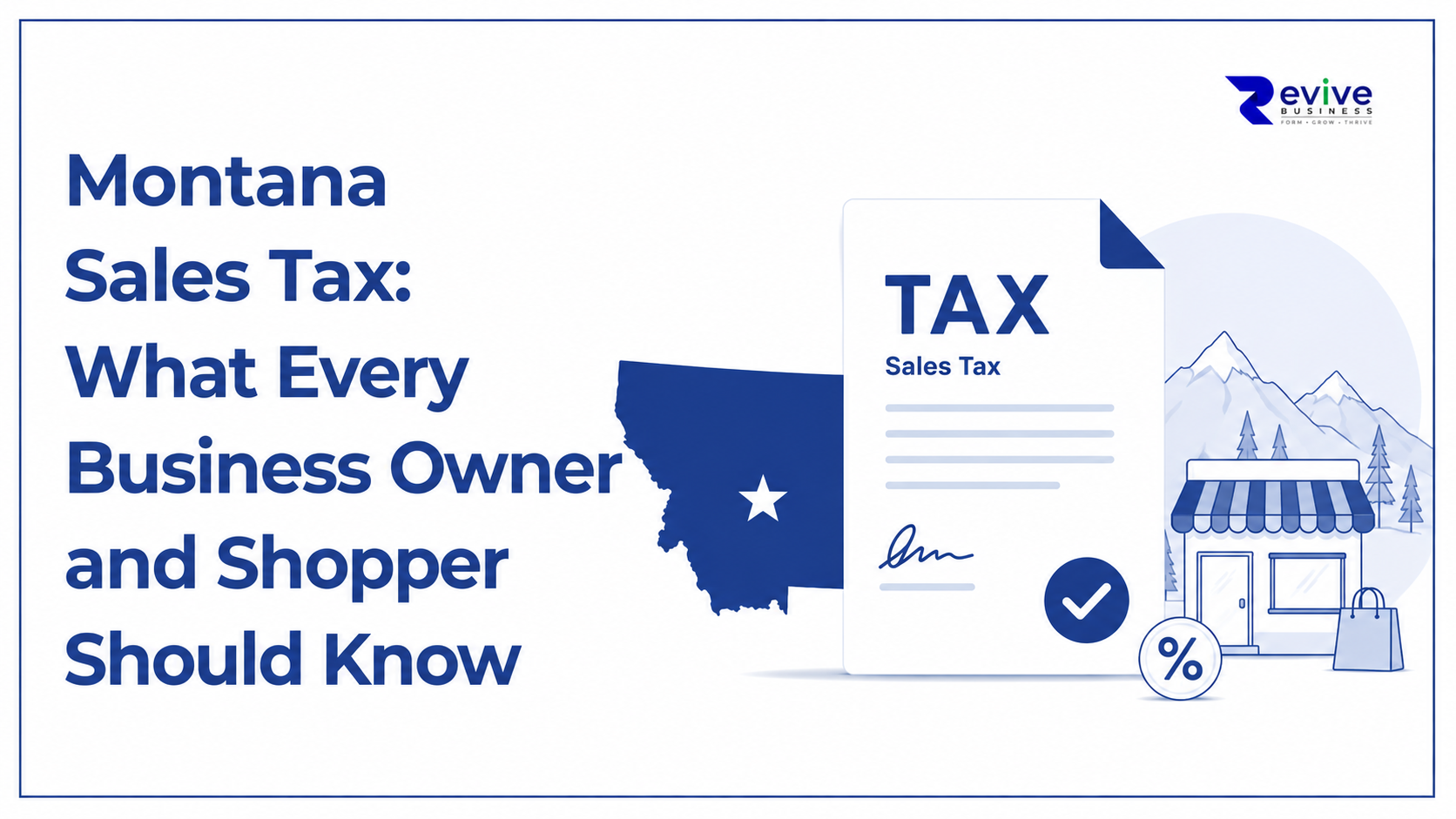
Montana Sales Tax: What Every Business Owner and Shopper Should Know
If you've ever wondered if you pay Montana Sales Tax for your daily purchase items, you are not alone.
If you've ever wondered if you pay Montana Sales Tax for your daily purchase items, you are not alone. Entrepreneurs, e-commerce sellers, remote business owners, and even tourists frequently ask this question, and for good reason.
The answer in a nutshell: Montana doesn't have a state sales tax. That isn't to say your business is off the hook entirely, though. Even if you don't do business in a specific location, there are still tax issues you should know about.
Let's understand it, clearly and practically!
Montana Sales Tax: Does It Actually Exist?
Only five U.S. states don’t have a sales tax: Alaska, Delaware, Montana, New Hampshire, and Oregon.
When you shop in Montana, whether you're purchasing groceries, clothes, electronics, or even a car, you won't find a sales tax line on your receipt. It's a definite benefit to the consumer and to businesses in certain ways.
The secret here:
However, there is a Resort and Local Option Tax in some tourist-heavy areas of Montana, such as Whitefish and West Yellowstone.
These local taxes are levied on certain items and services, primarily on restaurant meals, hotel stays, and recreational rentals.
The rates will differ depending on the location and are generally in the range of 1-3%.
Montana doesn't have a state-wide Montana Sales Tax, but there may be local taxes that do apply based on your business location.
Real Scenario: What This Looks Like for a Montana Business Owner
Suppose you owned a sporting goods store in Billings. A customer enters a store, purchases $300 of camping supplies. In most states, they would have to pay an additional sales tax of $20-$30. They pay in Montana only $300, no more.
Now, assume you own the same store in Whitefish where there is a local resort tax on some retail products. Depending on the product category, a local tax could still be collected.
The lesson: Do your homework; understand your city's rules, not the state's.
Wait, does Montana Have Sales Tax for Online Sellers?
This is where things get interesting, particularly for e-commerce businesses.
You might still need to collect sales tax in other states if you are a Montana seller and sell products to customers in other states. This is called economic nexus, and it's now a standard that stuck in the wake of the 2018 South Dakota v. Wayfair Supreme Court decision.
In practice, that means:
-
You sell from Montana to a Texas customer → Texas sales tax rules apply
-
If you sell to a California (CA) customer and you satisfy their threshold, then you are expected to collect the sales tax.
-
Montana to Montana sales - no state sales tax will apply.
That is why bookkeeping for an e-commerce business is crucial. If you are selling across state lines, you may find it difficult to find out which states you are required to collect taxes from and how much.
At Revive Business, we work with e-commerce business owners to ensure they don't miss any of these types of multi-state tax obligations.
Does Montana Have State Income Tax?
Many people think that a no-sales-tax state has low taxes, but it doesn't.
Montana is a state that has an income tax. So, now there is a 2-bracket format for 2024 that the state has.
-
4.7% on income up to $20,500
-
5.9% on income over $20,500
This is for people and can be for their business income, depending on the structure of your business. For example:
-
Single-member LLCs/sole proprietors are considered to be personal income, and income is taxed accordingly.
-
Income is treated as personal income and passed through to owners for S-Corps and partnerships.
-
Non-Corporations S-Corp/LLC: taxed as a pass-through, depending on the type of entity
Montana does require income tax, but you won't have to pay it when you make a purchase. The knowledge of a competent team, such as Revive Business, is essential to understand your business's structure and its effect on your taxes.
How Montana's Tax Setup Affects Business Formation Decisions
There are certain businesses that do better in Montana due to its tax climate. It's selected by entrepreneurs for several reasons:
-
Any friction in pricing for the consumer will be eliminated with no sales tax.
-
Reduced overall tax rates in comparison to other states (California, New York, etc.)
-
An easy income tax system that facilitates financial planning.
-
LLCs are not currently required to pay a franchise tax.
All of these have contributed to making Montana an intelligent and discreet place to start a small business, particularly one that provides a service, acts as a consultant, or sells online.
As a registered business entity, you'll also have to have a Registered Agent — this is a necessity in all states. The registered agent is the person to whom legal and government papers are served. On our Registered Agent Page, we detail all the items included and what we do at Revive Business to keep you in compliance.
What About Montana Use Tax?
Many business owners are surprised to learn that Montana does have a use tax in some cases.
When you order goods from another state that do not require you to pay sales tax and then bring these goods into Montana for use in your business, you could be liable to pay Montana use tax. This is a relatively rare occurrence, but here are some things to know about it, particularly if equipment, vehicles, or inventory is coming in from out of state.
The use tax is sort of a "fairness tax" to even out the competition between in-state and out-of-state vendors. Only used in certain situations, and application rates depend on the product.
Practical Tips for Business Owners in Montana
If this is your first time or you're already running, here are some things you should be working on:
-
Understand local tax laws; some cities, such as Whitefish and West Yellowstone, have resort taxes, which impact some businesses
-
Stay vigilant on out-of-state sales; Economic nexus laws may require payment of taxes in other states even if Montana does not have them.
-
Select the appropriate business structure; your business structure (LLC, S-Corp, C-Corp) will directly influence your income tax liability.
-
Maintain clean books; particularly if you're a business selling online, bookkeeping for e-commerce is not something you can do without; it's how you remain audit-ready and financially clear.
-
Have a registered agent; required by law to ensure that you don't miss important state filings or legal notices.
How Revive Business Helps Montana Business Owners
It's an experience that we have helped thousands of entrepreneurs go through at Revive Business. Montana's tax landscape is truly business-friendly, and only when you're properly structured that you start.
These are the services we provide:
-
Assistance with business formation as specific to Montana needs
-
Registered Agent services to keep you compliant, hassle-free; see our Registered Agent Page for more details
-
Filing and advising on tax returns for individuals and businesses; Individual and business tax return preparation and services;
-
Specialized ecommerce bookkeeping services, including tracking multistate sales tax
A dedicated team to help businesses comply with sales taxes across multiple jurisdictions.
We do more than just paper push. We ensure you are aware of your responsibilities, prevent errors and save you money, and set your business up for long-term success.
Frequently Asked Questions
Is there really no sales tax in Montana?
Correct. There is no state sales tax in Montana. Some cities and resort areas impose a local option tax of 1-3%, however, on certain items and services such as meals in a restaurant and lodging.
I sell products online from Montana. Does Montana have sales tax rules that apply to me?
Your in-state sales will not be taxed in Montana. However, if your customers are in other states, you might have to collect and pay sales taxes to those states under economic nexus laws. This is true provided you fall within their revenue and/or transaction limits.
Does Montana have state income tax even without sales tax?
Yes. The state of Montana does have a state income tax that has two rates: 4.7% and 5.9%. Income tax levied on businesses depends on their organization and profit.
Why do I need a Registered Agent in Montana?
All Montana LLCs and corporations need to designate a registered agent who has a Montana address. If not, you could miss out on important filings. Revive Business provides registered agent services to ensure you're covered.
Why do I need a Registered Agent in Montana?
Commercial entities engaged in e-commerce have to deal with sales tax complexities in more than 40 states. With good bookkeeping, you can see where you're selling, how much you're selling, if you've reached nexus thresholds, and you'll always be ready for tax time and never surprised by an audit.
Can Revive Business help me set up a business in Montana from another state?
Absolutely. Whether you're filing from Montana or from across the country, we'll serve as your registered agent and assist you in any ongoing compliance requirements.
Final Thoughts
Believe it or not, there is no state sales tax in Montana. However, the overall situation is more complicated.
Resort taxes, out-of-state sales tax, state income tax, and formation requirements continue to apply. The rules do not just need to be adhered to; they need to be understood and used to make better decisions about your business.
From forming a new LLC to running an e-commerce business to simply tidying up your books, Revive Business can help you every step of the way.
At Revive Business, we help entrepreneurs simplify compliance, reduce risk, and build stronger businesses with confidence.