TM vs Copyright: Key Differences Every Business Owner Must Know
Confused about TM vs copyright? Learn the real differences, when to use each, and how to protect your business the right way, with practical examples.
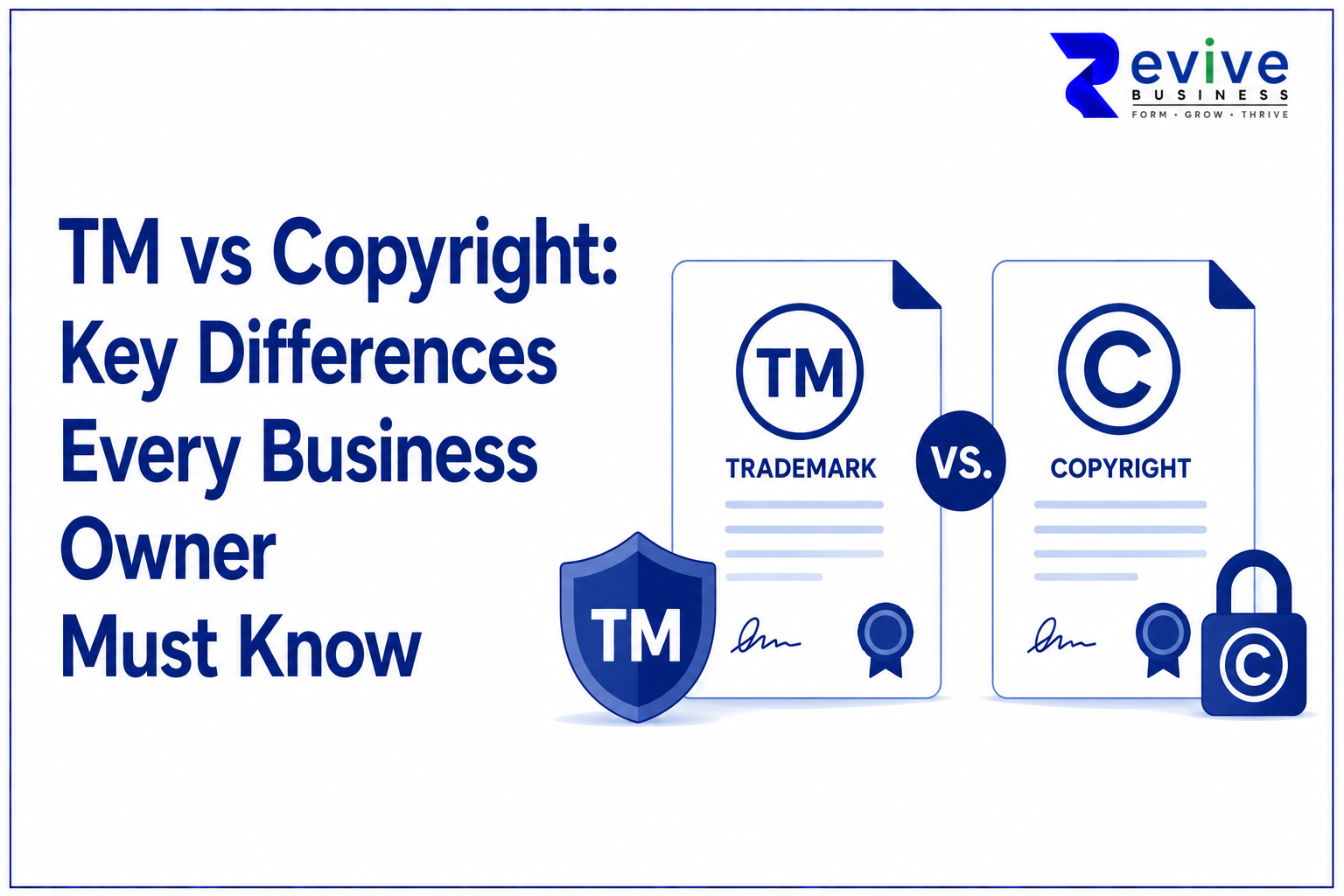
The ™ symbol is commonly seen next to a brand name, and the © symbol is seen on a website by most business owners. However, once you get to the actual understanding of the difference and which one you need, it gets a bit hazy.
This isn't just a legal technicality. The wrong protection (or no protection at all) can expose your brand, content, or product name entirely. Let's take a straightforward look at it.
What is a Trademark (TM)?
A trademark is used to protect brand identifiers, such as your business name, logo, slogan, or even a unique product packaging design.
Anyone who claims rights to a mark may use the ™ symbol, even if they have not registered the mark. The ® symbol, however, is only used for marks that have been officially registered with the relevant government authority (in the US, that's the USPTO).
Real example: Suppose you start a consulting company called "ClearPath Advisors. The ™ symbol is used right away after the name. However, until you register it, someone else in another state could use the same name without facing legal repercussions. Registration provides nationwide protection and allows you to sue in federal court for infringement.
Trademarks protect:
-
Business and brand names.
-
The use of logos and visual marks.
-
Slogans and taglines
-
Product names and packaging.
What Is Copyright?
Copyright covers original creative works; copyright protection is automatic as soon as you create something and fix it in a tangible medium. There is no registration fee, but it is highly advisable to register with the U.S. Copyright Office to bolster your legal position.
Real example: You create a comprehensive business plan for your clients and post it on your website. This guide is automatically copyrighted. It cannot be copied, republished, or sold without your permission.
Copyright protects:
-
Written content (blogs, books, reports)
-
Photography and artwork
-
Music and audio
-
Software code
-
Videos and films
Copyright does not cover ideas, facts, names, titles, or slogans; trademarks do.
TM vs Copyright: Side-by-Side Comparison
|
Feature |
Trademark (TM/®) |
Copyright (©) |
|
What it protects |
Brand identifiers |
Creative works |
|
How it's created |
Use in commerce or registration |
Automatically upon creation |
|
Registration required? |
Optional, but recommended |
Optional, but recommended for enforcement |
|
Duration |
Indefinitely (with renewal) |
Life of author + 70 years |
|
Enforced by |
USPTO |
U.S. Copyright Office |
Where Business Owners Go Wrong
These are the most typical and expensive errors:
-
Using ® before registering: The use of the registered trademark symbol before the approval of the mark is illegal. Use ™ until officially confirmed.
-
Assuming copyright covers your brand name: It doesn't. A business name needs trademark protection, and copyright only covers creative expression.
-
Waiting too long to register: Trademark registration in the US takes 8–14 months. The longer you wait, the more vulnerable you are.
-
Ignoring international protection: A US trademark doesn't protect you abroad. If you operate globally, look into the Madrid Protocol for international coverage.
Do You Need Both?
Yes, in many cases, and here's why.
If you are a content-driven business, you will probably need both protections to be in place. Your brand name and logo must be registered as a trademark. Your blogs, videos, guides, and original content are protected by copyright.
For a small accounting firm, consider trademarking the name and logo of your firm. Their client newsletters, tax guides, and website articles are copyrighted. If they don't, they're missing out on a lot of exposure.
Speaking of accounting firms, businesses that invest in proper small business accounting and bookkeeping know that intellectual property is an asset. As with revenue and expenses, it is important to monitor and safeguard your IP, and it has a financial value.
Practical Steps to Protect Your Business
The following are practical steps to help protect your business:
-
Audit what you own. Identify your brand names, logos, slogans, and your creative assets (content, designs, software).
-
Use ™ immediately. You don't need registration to start asserting trademark rights. Use it from Day 1.
-
Search before you file. Check existing marks on the USPTO's TESS database to avoid conflicts.
-
Register high-value works with the U.S. Copyright Office. Registration is what allows you to sue for statutory damages and attorney’s fees; automatic copyright protection alone is not enough.
-
Ensure your business structure is correct. Whether you're filing a partnership tax return or operating as a solo entity, IP ownership should be clearly recorded in your business documents.
-
Review annually. Laws change. Trademark registrations require maintenance fees. Include IP review on your annual business checklist.
A Note on Business Registration
The first step in protecting your IP is to have a legitimate business entity. As a business, you must have your company in existence before you can own trademarks or enforce copyrights. Business registration services can also ensure that your business is properly registered, an important aspect for legal protection and for tax filing.
Frequently Asked Questions
Can I copyright my business name?
No. Business names are not copyrighted. That requires a trademark. Copyright covers original creative expression, not brand identifiers.
What does the ™ symbol mean?
It indicates that you are asserting trademark rights in a mark. It does not have any formal legal standing until registered, but it does provide public notice of your claim and can be used as a basis for priority arguments.
What is the time period for trademark registration?
Under normal conditions, you can expect 8–14 months in the US. The status of your application can be found directly on the USPTO website.
Is it necessary to have a lawyer file a trademark?
It is not a legal requirement, but highly recommended. Applications can be rejected for errors or provide less protection.
What if someone uses my copyrighted work?
If your work is registered, you can sue for statutory damages (up to $150,000 for willful infringement) and attorney's fees. If you don't register, you can only recover damages for actual damages, which are more difficult to prove.
Final Thoughts
This doesn’t mean one or the other. You’ll need both for your business’s success. The trademark will protect your company, while the copyright protects your original works.
If you’re in the process of establishing your new business venture, now is the time to make sure everything is in order regarding your business structure, partnership tax return filing, small business accounting, and bookkeeping. These are key elements of creating a successful business, not details to consider later down the road.
Need help getting your business structure, registrations, and compliance in order? Revive Business offers practical support for small business owners navigating the complexities of setup, accounting, and compliance.