Vermont LLC: What You Need to Know Before You File
Learn how to form a Vermont LLC in 2026. Step-by-step guide covering Secretary of State filings, Articles of Organization, fees, and state rules.
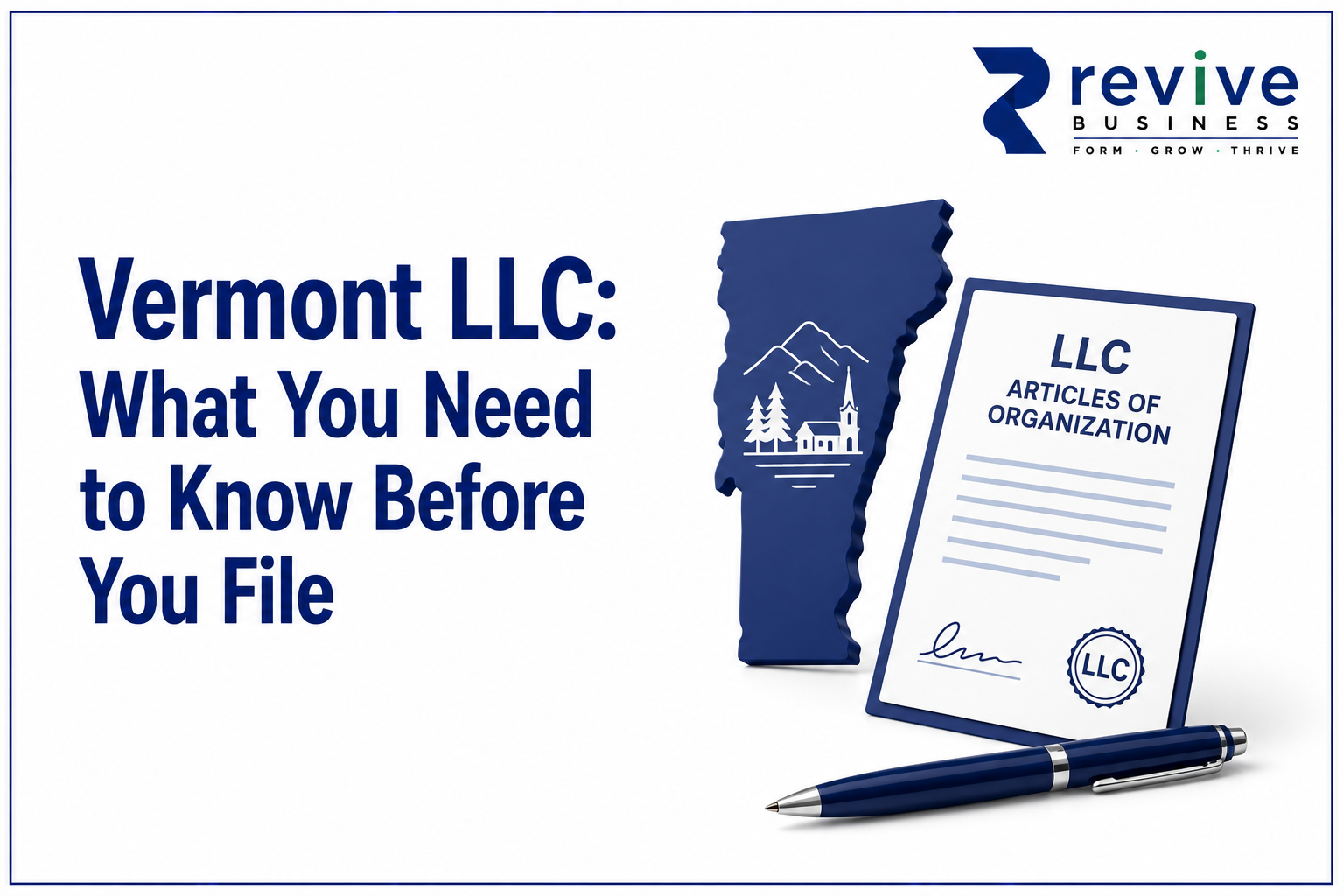
Vermont is certainly not the first state that comes to mind for the founders of an LLC. It's a simple, hassle-free way for businesses to get established, or for mission-driven organizations with the flexibility they need; but for businesses that do have a Vermont presence, or mission organizations seeking a flexible legal structure, it offers an easy, low-friction route to legal status.
This guide will take you through the process of Vermont LLC, the process of formation, and what ongoing compliance entails. No fuss, just the facts.
Why Form an LLC in Vermont?
Vermont is a small state that has a business-friendly LLC statute. There are a couple of reasons why founders choose it:
-
Vermont does not have an annual franchise tax for LLCs, unlike some states, such as California
-
Efficient filing with the Secretary of State's office (Articles of Organization filed online)
-
Member names are not required to be included in public formation documents in Vermont (privacy-friendly)
-
Well-developed legal structure; Vermont's LLC Act is up to date and well organized, providing the members with flexibility in managing the corporation.
However, if you don't live in Vermont, establishing in Vermont can complicate matters more than it helps. You still would need to foreign qualify in your own state (double fees and double registered agents). It's easier for most founders to form in their own state.
Forming a Vermont LLC Step by Step
Step 1: Select Your LLC Name
Your name must contain the words Limited Liability Company, LLC, or L.L.C. and clearly distinguish it from other Vermont registered LLCs. You can search name availability through the Vermont Secretary of State's business database.
Step 2: Designate a Registered Agent
Each Vermont LLC must designate a registered agent; an individual or business entity with a physical address in Vermont that is available during normal business hours to receive legal and official documents. If you don't have a reliable presence in Vermont, using a professional registered agent service is generally the most practical option.
When you're not in Vermont, a professional registered agent service is generally the most convenient option. It maintains a consistent address and forwards any notices to you promptly.
Step 3: File Articles of Organization
File with the Vermont Secretary of State online or by mail. The filing fee is $125 as per the latest fee schedule. Filing can be done via the Vermont Corporations Division portal.
Step 4: Form an Operating Agreement
Vermont does not require an operating agreement, but it is wise to have one. It outlines the structure of the LLC, profit proportions, and what occurs in case a member leaves the company. If you don't, the LLC rules of Vermont govern your business, and this might not be the rules you want.
Step 5: Obtain Your EIN
Obtain a federal Employer Identification Number (EIN) from the IRS website (it's free and only takes 10 minutes). It will be necessary for you to open a business bank account and pay taxes.
Step 6: Vermont Sales Tax Permit
If you sell taxable goods or services in Vermont, you must register for a Vermont Sales Tax permit with the Vermont Department of Taxes. This is in addition to registering your LLC and is one thing many people forget to do when they start a business. Both collecting sales tax without registration and failing to collect when required create compliance issues — register before your first taxable sale.
Ongoing Compliance Requirements
It's just the beginning, not the end, when it comes to the LLC formation. Vermont LLCs must:
-
Submit an annual report to the Secretary of State (currently $35 online).
-
Maintain a registered agent with a current Vermont physical address at all times.
-
Maintain up-to-date accounting records, especially if there are several members or you might want to attract investors.
Vermont's annual reporting period is based on the month of the LLC's formation, rather than on the calendar. If it is not done, your LLC goes out of good standing, and that can impact your ability to open a bank account, sign a contract, or respond to a legal issue.
So, what about a Non Profit LLC in Vermont?
Occurs more frequently than you think. While Vermont permits LLCs to be organized for nonprofit purposes, a nonprofit LLC is in a different universe from a typical for-profit LLC.
For those thinking about this structure, here are some points to consider:
Vermont allows for the formation of nonprofit LLCs, but it's not appropriate for all mission-driven businesses; it's ideal for some organizations governed by their members, for example.
Unlike a nonprofit corporation, a nonprofit LLC generally is not eligible for federal 501(c)(3) tax-exempt status, except in a few limited circumstances that meet specific IRS requirements.
If you want to solicit grants, tax-deductible donations, or support charitable causes, you will almost always find it easier to do so with a nonprofit corporation.
A real-life example: A community land trust in Vermont considered a nonprofit LLC for simplicity. With a business advisor's input, they realized that their grantors were looking for 501(c)(3) status, which meant they were going to have to make the change to a nonprofit corporation anyway. They missed out on time and filing fees as a result of the early formation decision.
Before filing, carefully consider the structure if you're developing a mission-driven project in Vermont. Selecting the correct solution at the outset prevents major re-working later on.
Frequently Asked Questions
What are the fees for setting up an LLC in Vermont?
Articles of Organization cost $125 to file with the state. You'll also need to cover fees for a registered agent ($50-$300/year), and you should expect to pay less than $500 to finish up your setup.
Is an operating agreement required for Vermont?
No, it is not required by law; but it is strongly suggested for LLCs that have multiple members, and even single-member LLCs who wish to maintain liability separation.
Should I register for sales tax in VT?
Yes, if you provide taxable services and/or goods to customers in Vermont. Sales tax registration is done separately with the Vermont Department of Taxes and is obligatory prior to beginning to collect.
Is it possible for a nonprofit LLC to be tax exempt in Vermont?
Vermont may provide tax exemptions at the state level, but federal 501(c)(3) status, which is more commonly sought, is not available to LLCs, in general. The majority of entities seeking tax-exempt status will find it easier to establish themselves as a nonprofit corporation.
If I reside in Vermont, do I need a Registered Agent?
If you have a street address in Vermont and are available during business hours, you may serve as your own registered agent. Many of the founders like to go with a professional service for reliability and to stay away from any public records that contain their own address.
Need to start your Vermont LLC?
It's easier if it's done right from the start — the right entity type, the right registrations, the right compliance calendar. No matter if you are going into business for profit or a mission-driven business, the steps you take at business formation will shape the course of your business.
At Revive Business, we are dedicated to assisting startup owners with the process of forming an LLC, registered agent requirements, and all other aspects of compliance without any oversight. Get in touch today and let's build your Vermont LLC the right way.