What Is a Business Permit? Why Missing One Can Shut Your Business Down
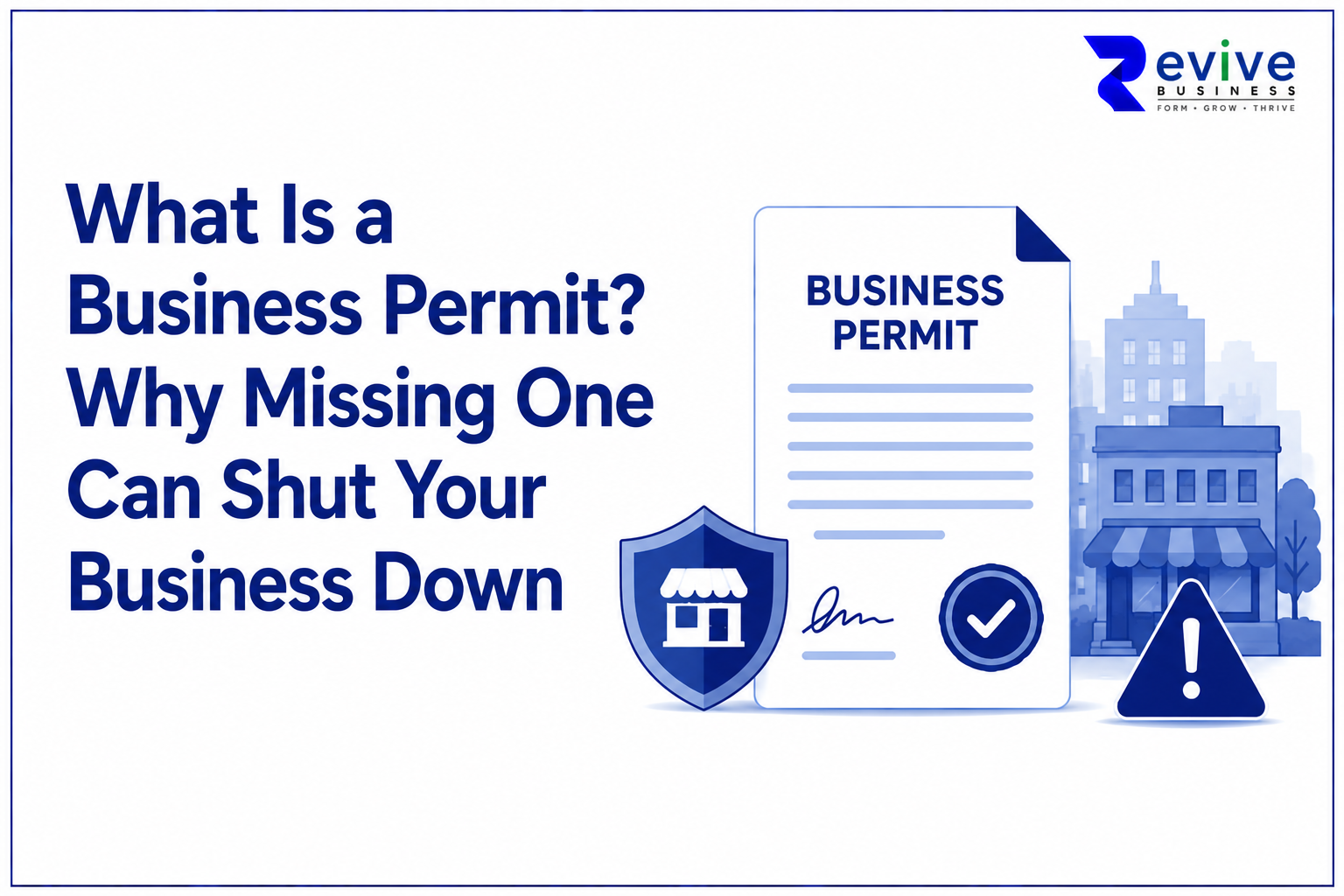
Many businesses launch illegally without realizing it. Missing a required permit can lead to fines, delayed openings, or even forced shutdowns. Before accepting your first customer, it’s critical to understand which permits your business legally needs.
What Is a Business Permit?
A business permit is a government-issued authorization that allows a company to legally perform specific activities, operate in certain locations, or meet regulatory requirements.
Unlike a general business license, which registers your business within a jurisdiction, a permit typically applies to a specific activity, location, or regulatory requirement. In simple terms, a permit confirms that your business meets the legal and safety requirements to operate in a specific way.
Think of it this way: A restaurant owner in the U.S. may need several different licenses, a general business license from the city, a food handler’s license from the health department, a liquor license for serving alcohol, and a sign license for outdoor signage. Each license addresses a different regulatory requirement.
There are federal, state, and local permit levels, and your industry, location, and structure largely dictate your responsibilities. Because permit requirements vary by industry and location, many business owners work with compliance professionals to avoid delays and filing mistakes.
Common Types of Business Permits
There are no general permits for all businesses. Here are some of the most common business permits new companies may need:
-
Zoning and Land Use Permits: Confirm that your business activities are allowed at your chosen location.
-
Health and Safety Permits: Commonly required for restaurants, childcare businesses, healthcare providers, and other regulated industries.
-
Professional License: Includes licensed professionals like contractors, lawyers, doctors, real estate agents, etc.
-
Environmental Permits: Required for businesses that handle hazardous waste, emissions, chemicals, or environmentally regulated operations.
-
Building & Construction: Essential for renovating and building out a commercial property.
-
Sales Tax Permit: Required to collect and remit sales tax, typically the first compliance requirement for product sellers.
Permits vs. Licenses: What's the Difference?
These two words are often confused, and with good reason. It's easy to explain:
-
A business license is a general license to conduct business in a particular jurisdiction.
-
A permit is an authorization for a specific activity, site, and/or operating condition.
-
A state license is a type of credential, usually for regulated professions, that proves you've met education, testing, or experience requirements set by the state.
Even so, a licensed electrician must have a permit for certain work to be done. Even if they have a liquor license, restaurants must be inspected yearly for health reasons. Many businesses need both licenses and permits to operate legally.
A Real-World Example: The Bakery That Almost Didn't Open
A small bakery entrepreneur in Texas incorporated as an LLC, opened a business bank account, and established a website in just one week. Then she learned that she had to get a food handler's permit, a Texas Cottage Food permit (because she was at home, initially), a sales tax registration from the Texas Comptroller, and a city zoning clearance. If she didn't have these in place, she could not legally sell them to the public. Because these requirements were discovered late in the process, the business launch was delayed by more than a month while applications and inspections were completed.
Situations like this are common for new businesses that begin operating before researching local and state compliance requirements.
Do Online Businesses Need Permits?
Many online business owners are surprised to learn that e-commerce businesses may still require permits and tax registrations.
Even if your business operates entirely online, you might still require:
-
Home occupation permit for inventory storage or operations in a residential location.
-
Sales tax registration in any state where you have nexus (a taxable presence).
-
Seller's Permit or Resale Certificate (if you buy goods wholesale and resell them).
-
Businesses selling regulated products may also need additional state or federal approvals, depending on the industry.
According to the U.S. Small Business Administration, permit requirements vary by industry and location.
How to Find Out Which Permits You Need
Permit requirements vary based on your industry, business activities, and location. These steps can help you identify the permits your business may need:
-
Identify your industry. There are some industries (healthcare, food service, childcare, finance, and construction) that are required to have permits regardless of location.
-
Check your state's requirements. Most states publish permit and licensing information through their Secretary of State or business regulation websites.
-
Check local requirements. County and City regulations may be in addition to state regulations.
-
Consider federal requirements. Certain sectors need federal permits from agencies such as the Federal Aviation Administration (FAA), the United States Department of Agriculture (USDA), or the U.S. Department of Justice's Bureau of Alcohol, Tobacco, Firearms, and Explosives (ATF).
-
Track renewal deadlines carefully. Many permits must be renewed annually or biennially to remain compliant. There is no warning that your business is in violation until the renewal is missed.
The U.S. Small Business Administration (SBA) maintains a helpful resource for identifying federal permit requirements by business type, a solid first stop for anyone building their compliance checklist.
What Happens If You Operate Without the Right Permits?
Operating without the required permits can create serious legal and financial risks. Penalties may include fines, forced business closures, permit suspensions, or legal liability., be closed down, have your owners personally liable (if your business is not set up appropriately), be unable to get a business insurance policy, and end up losing your vendor, landlord, and/or client support because they will not accept your business if your permits are not on file.
Compliance violations can also damage your reputation with customers, landlords, vendors, and business partners. You may be subject to scrutiny you are not ready for if a competitor or a customer who is not happy about your product or services takes issue with you and complains to a licensing board or city inspector.
Permits and business structure: Why formation matters first
When applying for a permit, you'll need to give the legal name, structure, and Employer Identification Number (EIN) of your business. This means that in order to apply for most permits, you must first have your business legally organized.
Before applying for most permits, your business entity should start your LLC and get compliant. Getting your LLC filed, your EIN issued, and your operating agreement in place creates the legal structure required for tax registration, permitting, and ongoing compliance.
Attempting to apply for permits before the entity's formation typically results in some applications being denied, delays, and even redoing applications entirely.
Staying compliant after you've launched
Getting approved is only the beginning. Businesses must maintain ongoing compliance after launch. Here are the things that need to be monitored regularly:
-
Annual renewal dates for all active permits and licenses.
-
Changes in your business activities that might require new permits, adding a food menu, expanding into a new state, hiring employees, etc.
-
State law changes, especially around sales tax nexus thresholds, have been actively shifting in 2025 and into 2026.
-
Registered agent obligations if you're operating in multiple states.
-
Federal regulatory updates, particularly if you're in a sector that saw rule changes in 2025 (financial services, government contracting, online retail).
FAQs About Business Permits
Do I need a permit if I'm just starting and haven't made any money yet?
In most cases, yes. Many permits are required before you legally begin operating, not after you start generating revenue. For example, a food business needs health department approval before its first sale, not after its first profitable month.
Is a state license the same as a business permit?
Not exactly. A state license typically refers to a professional credential granted by a state licensing board. It confirms you've met industry-specific qualifications. A permit is an operational approval, often issued by a government agency, that authorizes a specific activity. Many businesses need both.
How do I know if my online business needs a sales tax registration?
If you sell taxable goods or services and have customers in a state where you've exceeded the economic nexus threshold (typically $100,000 in sales or 200 transactions), you're generally required to register and collect sales tax in that state. Requirements vary, so it's worth reviewing the rules for each state where you have meaningful sales activity.
Can I apply for permits myself, or do I need help?
Many straightforward permits, like a basic local business license or a sales tax permit, can be handled directly through the relevant government portal. However, if you're in a heavily regulated industry, operating across multiple states, or navigating complex local zoning rules, working with a compliance professional can save significant time and reduce the risk of errors.
What's the first permit most new businesses need?
It depends on your industry and location, but for most small businesses selling products or services, a general business license from your city or county and a state sales tax registration are the most common starting points. From there, industry-specific requirements layer on top.
Need Help With Business Permits and Compliance?
Revive Business helps business owners handle LLC formation, sales tax registration, and compliance filings so they can launch with confidence.
Start your LLC, register for sales tax, and stay compliant from day one with guided business formation support.