What Is a Domestic Limited Liability Company? A Complete Guide for Business Owners
Once you formally organise your business, you're likely to find yourself asking the question, What kind of LLC do you need? Many new business owners think that an LLC is an LLC, but this type of classification may have an impact on your registration process, taxes, and ongoing compliance needs.
The difference between a domestic vs foreign LLC is no legal mumbo-jumbo! It tells you where to sign up, how to file taxes, and if you are running legally from state to state.
This guide makes it simple; from the start, you'll be making the right decision.
What is a Domestic Limited Liability Company?
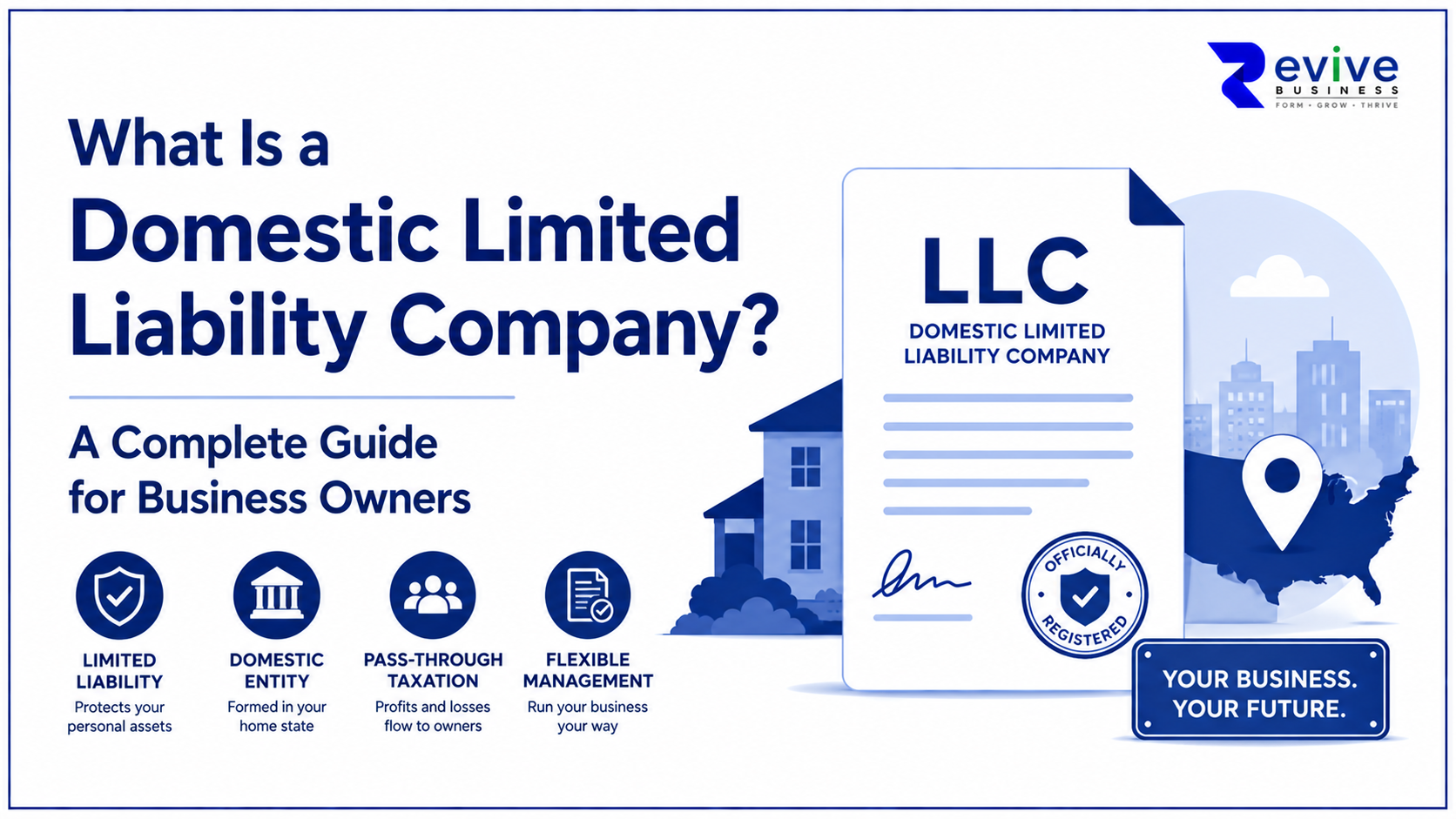
A domestic limited liability company is an LLC that is created and registered in the state where it does most of its business. If you reside and conduct your business within the State of Texas, and you register your LLC with the Texas Secretary of State, then you have a domestic LLC in Texas.
LLC formation is a state, not federal, process. Registration varies state by state in terms of requirements, fees, and continued compliance requirements. Once your LLC is approved by the state, it is a legal entity in the state where it was formed; and “domestic” means that it was homegrown, that is, it was formed and operates within the state.
Real-life example: A graphic designer in Colorado becomes a limited liability company and serves only Colorado clients. That's a domestic LLC; simple, clean, and compliant in just one state.
Key Features of a Domestic LLC
-
Limited liability protection: Your personal assets (home, savings, car) are protected against any claims or debts of the business.
-
Pass-through taxation: Business income goes directly to your personal tax return, rather than the corporate tax return, where it is double-taxed.
-
Flexible management structure: Have a single-member LLC or add several members and use a custom operating agreement.
-
State-specific registration: Registered with and governed by the rules of your home state.
-
Compliance requirements: Annual reports, agent maintenance, & state-specific filings ensure that your LLC remains compliant.
What's the Difference between a Domestic and Foreign LLC?
This is where a lot of business owners make errors. Foreign LLC doesn't mean foreign; it just means that your LLC is conducting business in a state that is not the state where it was registered.
|
Factor |
Domestic LLC |
Foreign LLC |
|
Where formed |
Home state |
Different state from where it operates |
|
Where it operates |
Same state as formation |
One or more additional states |
|
Registration |
Registered in the home state only |
Must register in each state in which it operates |
|
Tax implications |
Files in the home state |
May owe taxes in multiple states |
|
Compliance |
One state's requirements |
Multiple states' annual reports and fees |
Practical scenarios
-
Online business: If a consultant owns an LLC that is registered in California, but conducts business in other states, they might have to register as a Foreign LLC in those other states.
-
Multi-state business: A retail brand that was established in Delaware (which is often done) and has in-state retail outlets in both New York and Florida should register as a foreign LLC in both states.
-
Fully remote businesses: An LLC may have obligations in another state even if the business is fully remote, if the business maintains a presence in that state through employees or a physical presence.
When Do You Need to Register as a Foreign LLC?
It is important to note that the term "doing business" in another state is very broad. Generally, if your business has a substantial presence in another state, you'll need to register in that state, even if your LLC happened to be registered in another state.
Common reasons for registering foreign LLCs include:
-
Opening up a real office or retail outlet in another state.
-
Employing people from another state.
-
Operating a warehouse or distribution centre in a different state.
-
Frequently visiting clients or holding services in other states in person.
Benefits of Starting a Domestic LLC
If you are most of the small business owners or if you are a first-time entrepreneur, it is better to start a domestic LLC in your home state, and it's also the most convenient and cost-efficient process. Here's why:
-
Liability protection: Keep your own and your business's finances segregated from the beginning.
-
Credibility: LLCs are more credible than sole proprietorships for clients, banks, and partners.
-
Simpler tax structure: Pass-through taxation means it's easier to file for most small businesses.
-
Access to business banking: You will need to have an LLC to open a business bank account.
-
Simplified operations: No board of directors means more flexibility in decision-making.
Common Mistakes Business Owners Make
While it's easy to register an LLC, many business owners struggle to keep it properly up and running. Be aware of these dangers:
-
Choosing the wrong state: Forming in Delaware or Wyoming to save on taxes can backfire if your business primarily operates in another state, since you’ll likely still need to register there as a foreign LLC.
-
Failure to File Annual Reports: Most States have annual or biennial reporting requirements. Failure to meet the deadline may lead to penalties or administrative dissolution.
-
Not using registered agent services: Every LLC must have a registered agent in its state of formation. Listing yourself can expose your home address publicly and create compliance gaps if you miss important notices. Learn about in-state registered agent services.
-
Failure to file taxes: LLCs are still taxable at the federal and state levels. Penalties and interest are incurred for missed deadlines.
-
Mixing situations of registered vs foreign. If you expand your business to a new state without filing a new LLC, you violate compliance and may face back taxes, fines, and the inability to sue in the new state.
How Revive Business Can Help
There are many moving parts to forming and operating an LLC. You don't need to worry about paperwork, and you don't have to worry about reviving your business by yourself, because Revive Business takes care of it all.
If you're looking to incorporate a domestic LLC, are looking for registered agent services in your state to keep you private and compliant, or need assistance with your state and federal tax return services, Revive Business has your back.
Final Thoughts
Domestic LLCs are a common starting point for many small businesses. For most entrepreneurs, forming an LLC in their home state is a practical first step because it is relatively simple, cost-effective, and can provide limited liability protection when properly maintained.
The difference between domestic and foreign LLCs is important as your business expands. You can be subject to fines, back taxes, and legal hassles that you don't deserve when expanding to new states without registering.
Get your LLC properly established and properly administered, and hire professionals who will know the compliance world. That is the key principle all successful businesses are constructed upon.
Ready to take the next step? Contact Revive Business today and let our team handle your LLC formation, registered agent, and tax filing needs from day one.
Frequently Asked Questions
Is a domestic LLC the same as a local LLC?
Not exactly; "local" isn't a legal term of use. Domestic Limited Liability Company (LLC) refers to an LLC established under any state's laws. All LLCs are local to their state of existence, but the keyword is "domestic" in its legal definition.
Can a domestic LLC operate in another state?
Yes, but it first must register as a foreign LLC in that state. If you expand outside of your home state, be it by employees, offices, or regular physical business operations, you usually need to register your LLC in all states in which you plan to operate. Requirements differ; consult the Secretary of State's office in each state and/or a professional.
Do domestic LLCs pay federal taxes?
LLCs are considered pass-through entities, meaning the business doesn't pay federal income tax. Rather, profits or losses are passed on to the member(s) and are shown on their personal returns. However, even LLCs can have self-employment taxes, and multi-member LLCs must submit a partnership return to the IRS. You can learn more at IRS.gov.
What happens if I don't register as a foreign LLC when required?
Consequences of operating in a state without foreign LLC registration can be severe, including back taxes and penalties, inability to file lawsuits in that state's courts, fines issued by the Secretary of State, and administrative action taken against your business. It's a compliance issue that can escalate rapidly, and it's always better to register properly in the first place.
Should I form an LLC in my home state?
For most small businesses, yes. While states like Delaware and Wyoming are often marketed as LLC-friendly, starting a domestic LLC in your home state is usually more practical. If you operate primarily in your home state, forming elsewhere often means paying to register in two states anyway: your "tax haven" state and your home state as a foreign LLC. The SBA offers additional guidance on choosing the right business structure.