What Is Regulatory Compliance? and Why It Can Make or Break Your Business?
What is regulatory compliance? Learn why staying compliant protects your business from massive fines, legal shutdowns, and brand reputational damage.
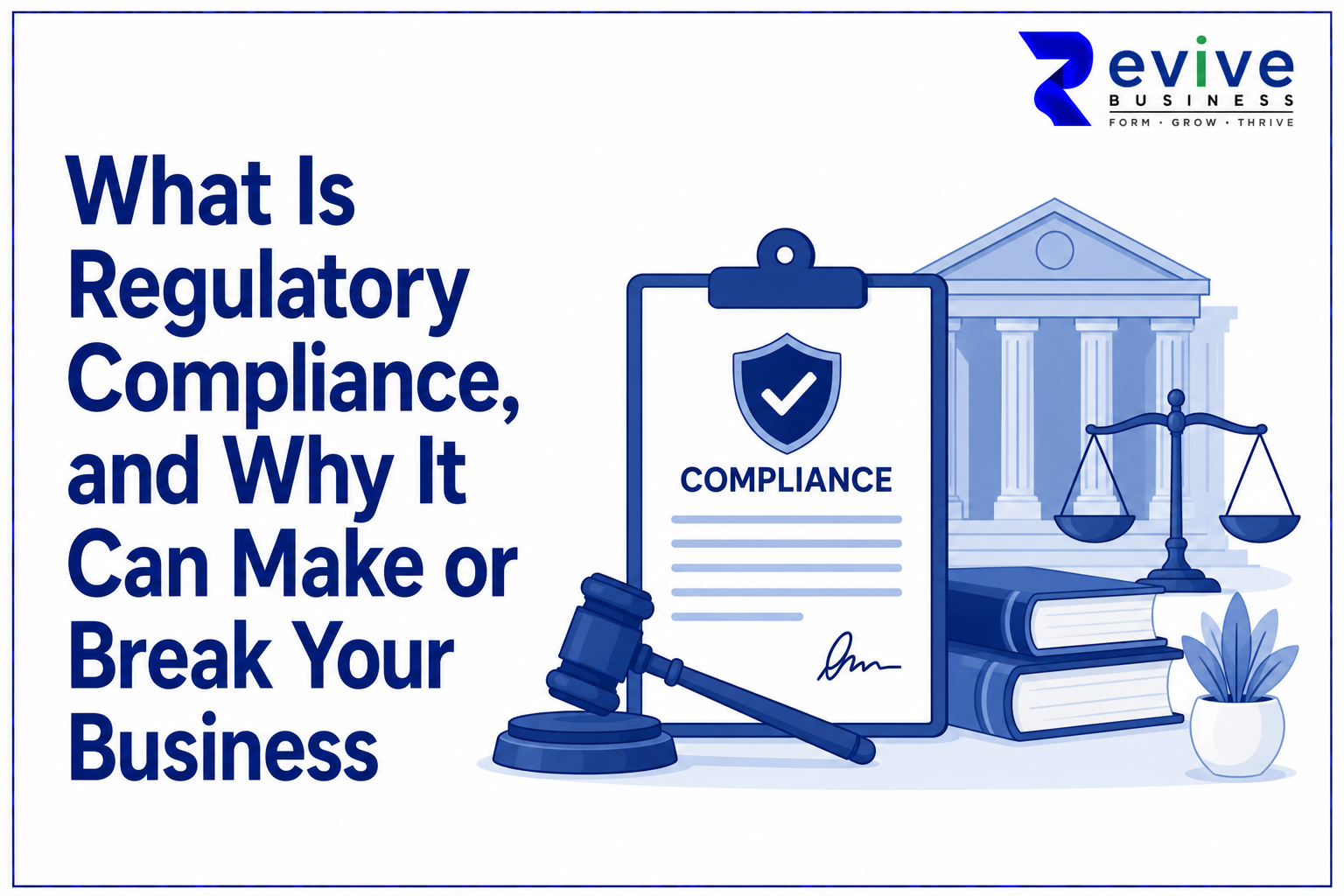
Regulatory compliance is the condition of being compliant with the laws and regulations applicable to a company, as well as industry standards. Penalties, lawsuits, and long-term damage to the reputation can occur if these requirements are not met.
This guide details what compliance is, why it's important, and how to establish a compliance system that you can stick to in the long run.
What Is Compliance In Business?
Business compliance is the adherence to all legal, regulatory, and contractual requirements for conducting business in a certain industry or location.
It typically includes:
-
Federal and State laws (tax, labour, employment, privacy)
-
Industry guidelines such as HIPAA, SEC, and FDA compliance rules
-
Local licensing and zoning requirements.
-
Compliance with client, vendor, and partner agreements
In simple words: When your business complies, it is safe from regulatory risks and above board.
Why Regulatory Compliance Matters for Businesses
The importance of regulatory compliance for businesses
Compliance is not something that's just done on the side; for any company to run, it's essential.
Not adhering to regulatory compliance requirements can lead to:
-
Financial penalties/back taxes
-
Legal issues and litigation.
-
Exclusion from business licences
-
Operational shutdowns
-
Reputational damage
The Real Cost of Non-Compliance
Non-compliance is significantly more expensive than prevention.
Research often cited in compliance risk studies (including Ponemon Institute findings) shows that the cost of non-compliance can be multiple times higher than the cost of maintaining proper compliance systems.
Common real-world consequences include:
-
Unpaid sales tax liabilities across multiple states
-
Labor audits resulting from the classification of employees as wrongdoers.
-
Businesses that fail to maintain a registered agent may face legal penalties, miss important government notices, and risk losing their good standing with the state.
-
Business disruption in the course of regulatory investigations
These risks are magnified for expanding companies.
Key Areas of Business Compliance (Checklist)
-
Business Formation and Structure
How your business is legally structured affects everything, including taxes, liability, and regulatory obligations. Choosing the right structure (LLC, S-Corp, C-Corp) and registering correctly is step one. If you're ready to form a legally compliant business, working with professionals from the start saves significant trouble later.
2. Bookkeeping and Financial Records
The Internal Revenue Service (IRS) presumes businesses maintain accurate and organized records. Organising is more than just putting receipts in a folder. It implies sections, transactions, and accounts that are reconciled and documentation that can withstand scrutiny.
Audit-proof business bookkeeping isn't about being paranoid; it's about being prepared. Companies that have clean financial records do better when it comes to auditing, dispute resolutions, and even making better financial decisions. The IRS recommends keeping most business records for at least three to seven years, depending on the document type.
3. Registered Agent Requirements
The majority of states mandate a registered agent, a company representative, or a service that accepts legal documents on behalf of the business. This is more important than one might think.
The papers of your business are first given to your registered agent if your business is sued or a business gets a regulatory notice. Without proper identification or if the agent fails to receive the notification, you may be in breach of some sort of legal case without realizing it.
A professional service to appoint a commercial registered agent ensures someone is always available at a physical address during business hours, something a sole proprietor working from home can't reliably guarantee.
4. Employment Law and HR Compliance
With employees come a labyrinth of responsibilities: wage and hour laws, anti-discrimination policies, workers' compensation, unemployment insurance, classification of employees versus contractors, and more. The Department of Labor offers compliance assistance tools by industry. Using them proactively is far less painful than responding to a complaint after the fact.
5. Data Privacy and Cybersecurity
This is a rapidly expanding area. If your business captures customer information, which most businesses do, you probably have legal responsibilities about how customer information is stored, used, and protected. This is true not only of email lists, payment details, customer accounts, or even web tracking cookies.
Building a Compliance Culture (Not Just a Checklist)
The key difference between businesses that remain compliant and those that do not is that it isn't simply about having the correct forms on file. It's about developing habits and systems.
In practice, this translates to:
-
Conducting frequent compliance checks, at least once a year, and when you move to a new state or start employing workers for the first time!
-
If you are working with qualified professionals (a good CPA, attorney, or compliance consultant), do not view this as an expense; it's an investment.
-
Documenting everything is important if a regulator asks; show your work!
-
Train your staff; staff who know the reason for a policy are more apt to follow it.
A small e-commerce company had just been in business for 3 years without knowing they had nexus in 4 other states, and were responsible for sales tax in all of them. By the time they finally got it, it cost more than $40,000 in back taxes and interest. In year 1, it would have been detected with a simple annual review.
Frequently Asked Questions
What's the difference between regulatory compliance and legal compliance?
They overlap significantly. The term "legal compliance" usually means abiding by the law — the laws that have been passed by the legislature. The term "regulatory compliance" may be used to describe rules from the government agency with enforcement power, such as the Internal Revenue Service (IRS), Securities and Exchange Commission (SEC), or OSHA. In reality, most companies will have to meet both.
Does compliance apply to small businesses?
Yes. Indeed, small businesses are usually more susceptible, as they do not have dedicated compliance personnel. Don't let the rules get smaller because the team is smaller.
How often should I review my compliance status?
At least once a year. But also when you hire employees, expand to a new state, introduce new products or services, or when you experience a significant increase in revenues.
What happens if I’m non-compliant?
The seriousness will determine the consequences, which can vary from written warnings and fines to license withdrawal, court action, and criminal prosecution.
Where do I start if I'm not sure where I stand?
Start with a business compliance audit. Check the registration, licenses, tax submissions, contracts, and terms of employment. A professional can help you discover the gaps in no time.
Final Thoughts
Compliance with the regulations is not a nuisance to go through. It's the foundation of your business. As long as it's solid, you can grow with confidence. With low strength, every expansion, audit, or legal battle is a potential crisis.
The positive side, most compliance problems can be avoided if you get it right from the beginning.
Whether you're forming a compliant business, organizing your bookkeeping, or managing registered agent requirements, expert guidance can help you avoid costly mistakes and stay on track.
Don't wait for a problem to get compliant. The best time to start is before you need to.